

Open and sort
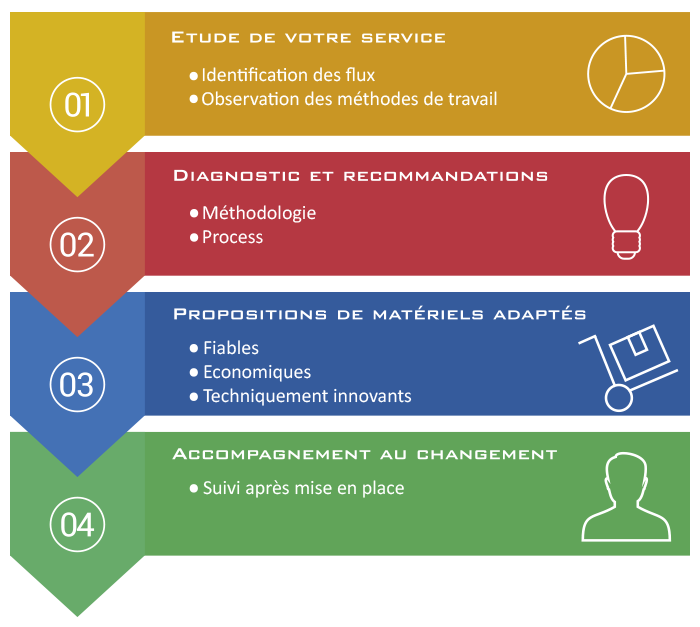
To fit out your workspace, Outils Océans relies on the following professional approach :
Our solutions are tailored to each stage of your mail and logistics flow processing, in order to meet the following objectives:
Ergonomics
Outils Océans is committed to complying with ergonomic standards and recommendations issued by organizations such as INRS or CRAM, and to preventing musculoskeletal disorders (MSDs).
We apply these principles in a pragmatic way, which is why our clients value our work.
In the design of workstations, we pay particular attention to :
• reducing the need to carry heavy loads,
• minimizing load transfers,
• eliminating awkward or strenuous postures.
This translates into the following examples :
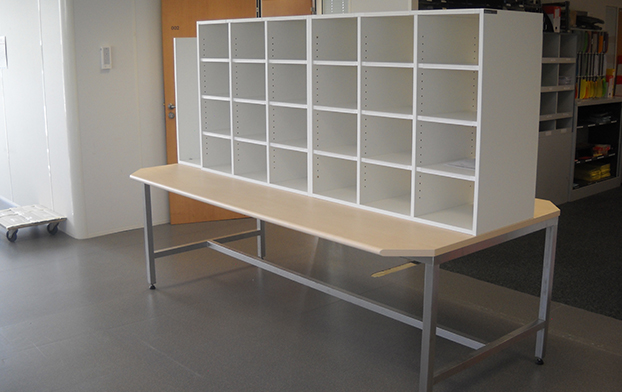


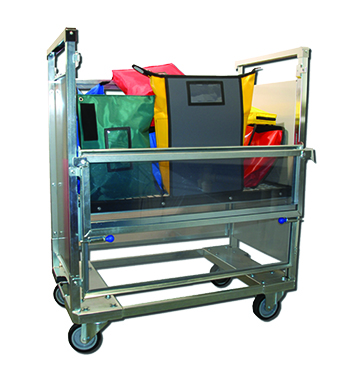
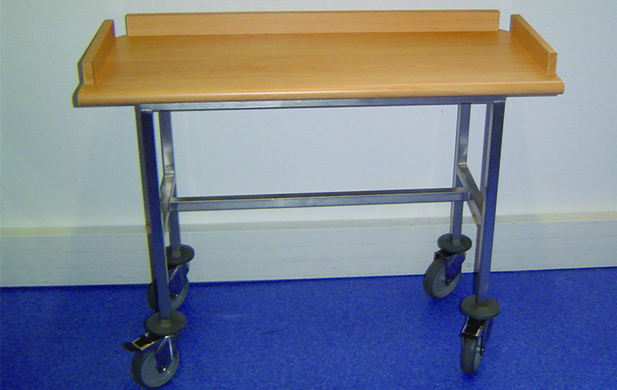
Our solutions are regularly reviewed and validated by independent ergonomists and occupational health physicians.
Modularity
The sorting layouts are scalable :
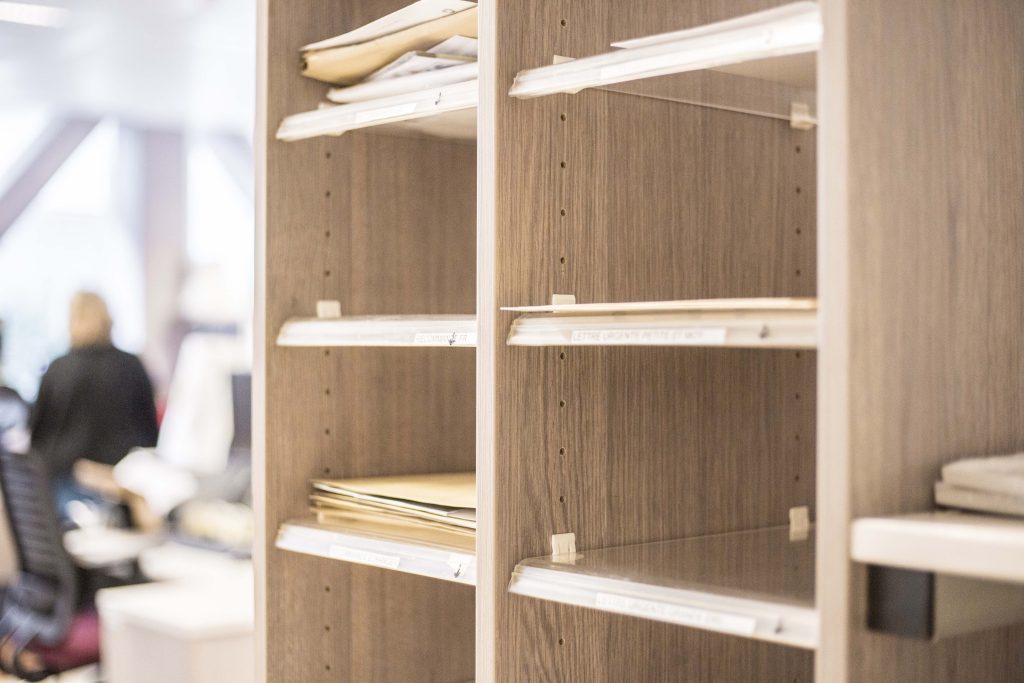
For plexiglass shelves, we provide so-called “wedge” pins.
Space Optimization
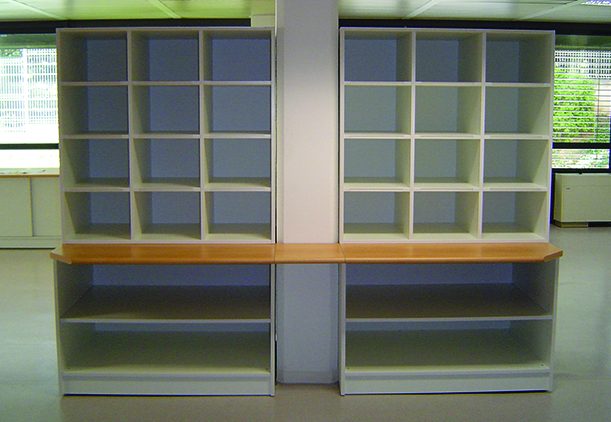
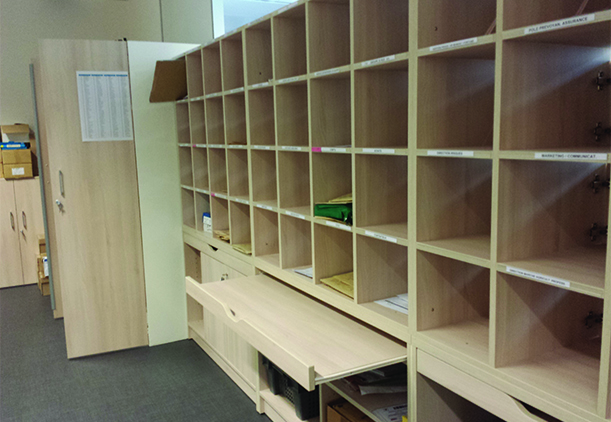
Whatever the layout of your premises, we adapt our furniture to optimize the available space :
Quality and Durability
Our solutions are designed for use in production environments.
Through the careful selection of materials, we guarantee the durability of our equipment.
Return on Investment
Thanks to our approach based on a preliminary assessment and an analysis of existing workflows, our solutions help optimize mail flows and task distribution.

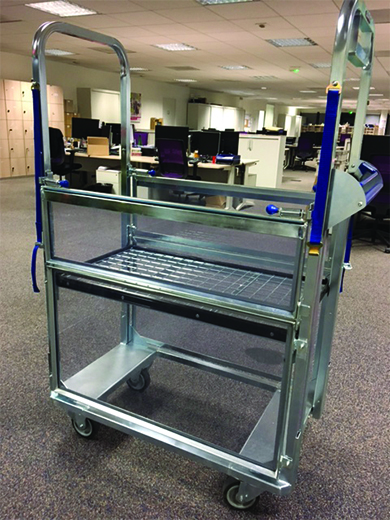
The reception of shuttle bags, pouches, and trays is carried out in a dedicated area using cage-type handling trolleys made available to the carriers.
To facilitate handling, models with self-leveling bases help reduce strain on operators.
At the start of the workday, operators simply roll the loaded trolleys to the unpacking station.

During the day, envelope deliveries by couriers can be handled via a reception desk.
For the reception of parcels or pouches, the reception area can be equipped with roller conveyors or a pass-through system.
This setup ensures organized reception both during the day and at night, while optimizing interactions with carriers:

For reception tracking, Traç@flux enables you to:
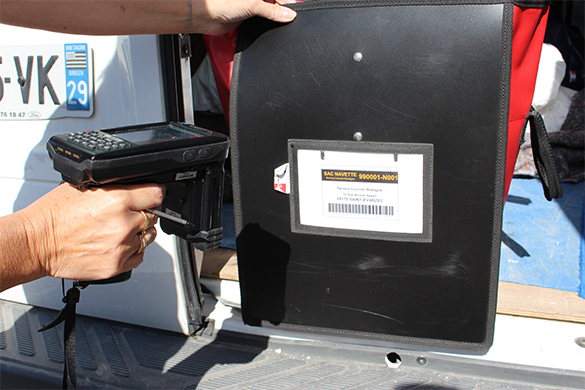
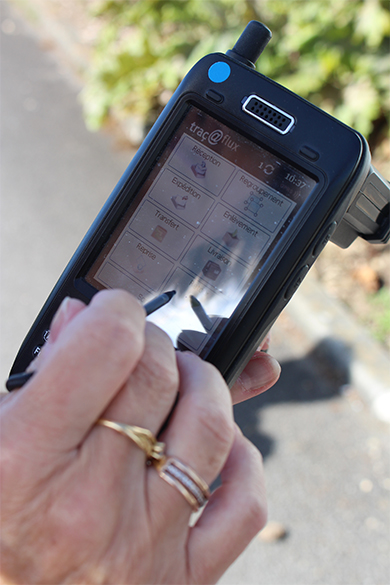
Opening shuttle bags, trays, and pouches requires breaking the security seals, emptying the contents, and sorting them.
How can this process be accelerated and made less labor-intensive? Outils Océans recommends setting up a dedicated unpacking station, designed to smooth the workload upstream of the primary sorting phase.
The operator assigned to this station supplies one or more primary sorting stations. Their tasks include:
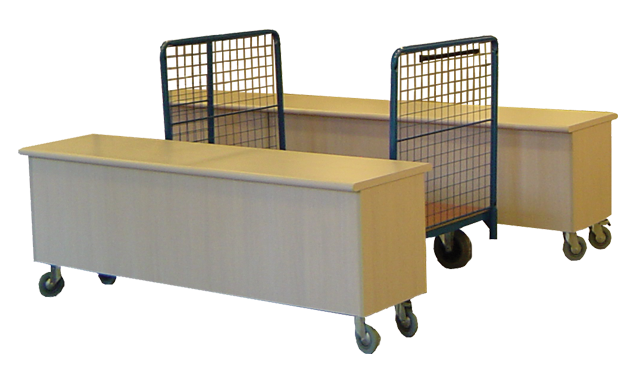
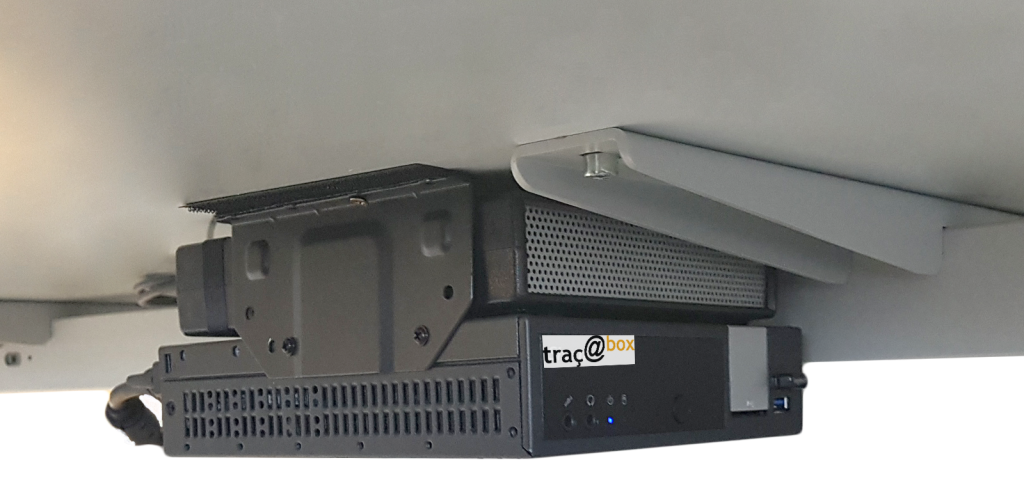
The traceability provided by Traç@flux can be integrated into the unpacking station thanks to the Traç@box.
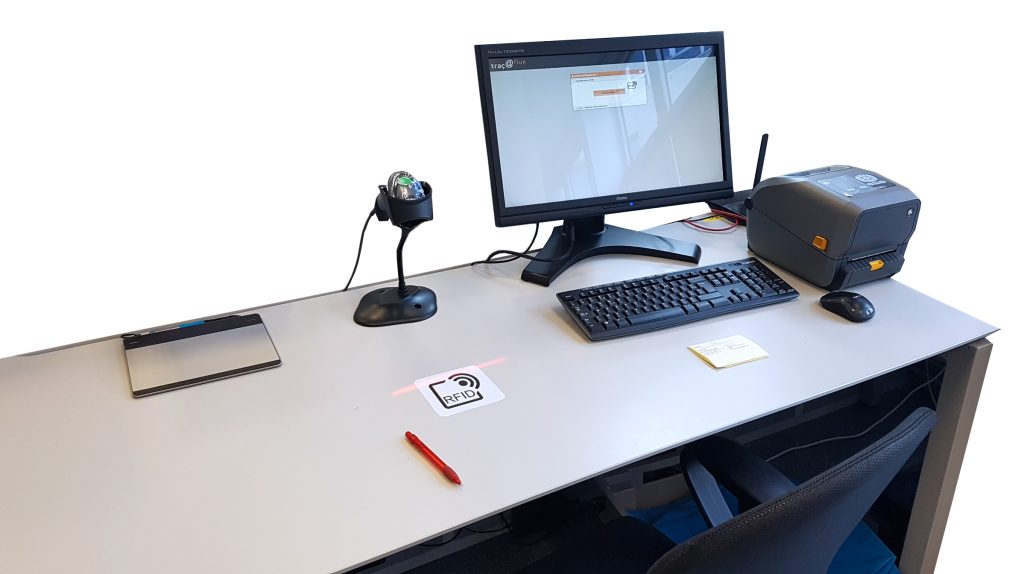
Primary sorting consists in identifying sorting criteria that allow mail or documents to be directed toward secondary sorting stations.
These criteria may include:
These sorting criteria are represented, at the very least, by stacks on a sorting table, but preferably in clearly labeled baskets, trays, or compartments.
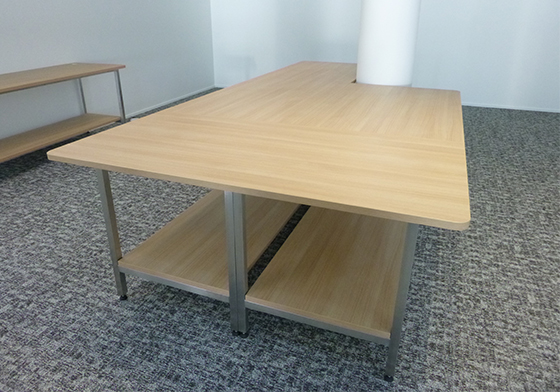
Les tables de tri peuvent recevoir :
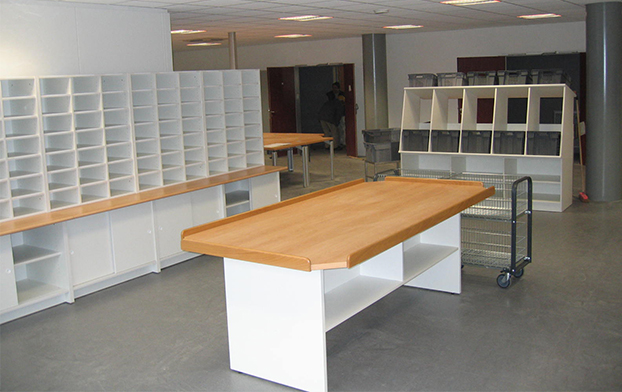
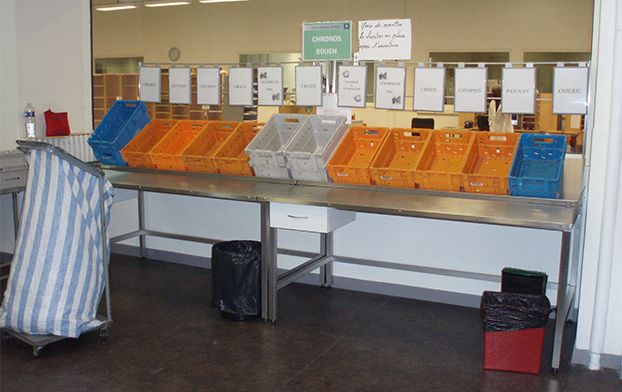
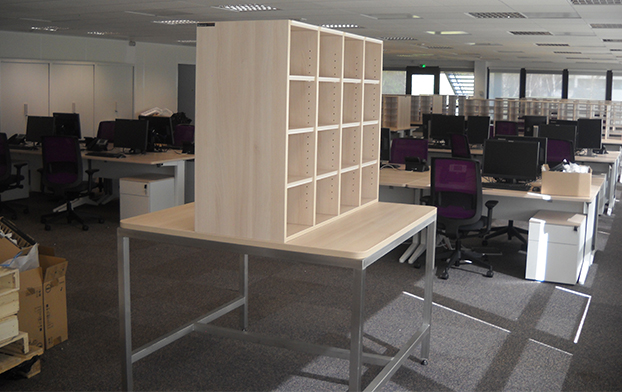
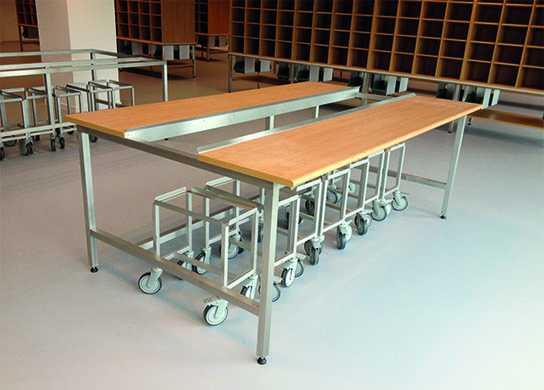
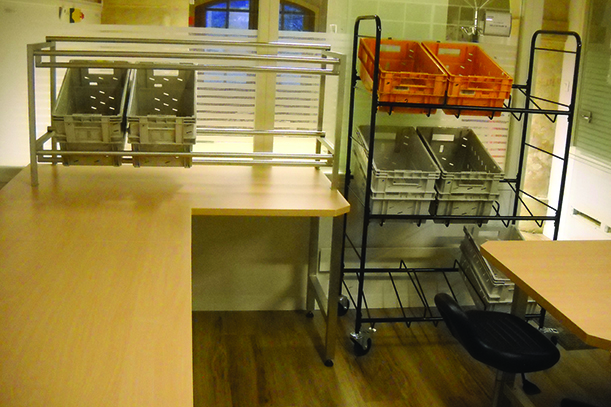
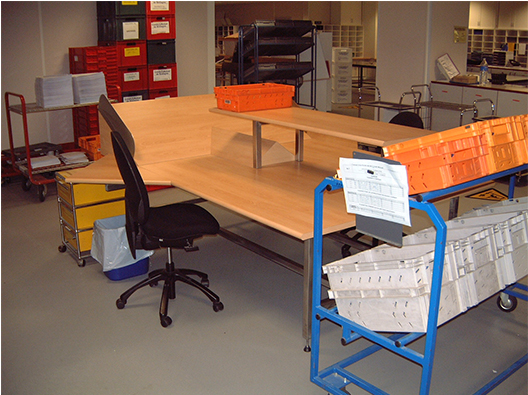
To further optimize primary sorting, Outils Océans has developed the funnel table concept.
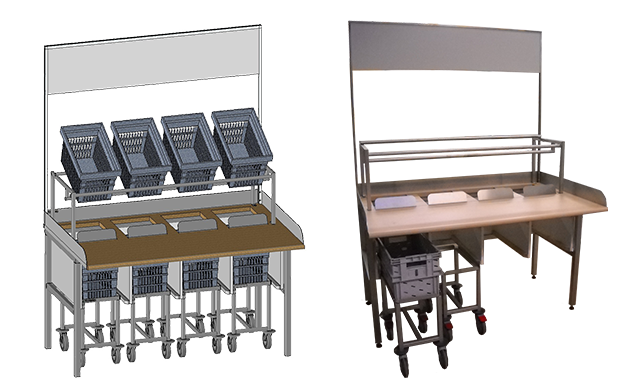
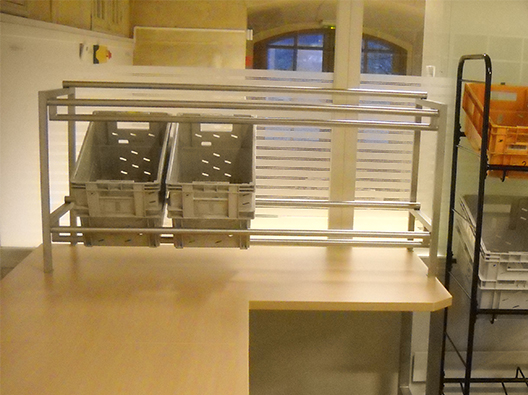
Funnel tables accommodate 4 to 6 trays or baskets arranged on 1 or 2 levels.
The work surface can be single-sided or double-sided, depending on the configuration. One or more operators assigned to the station can rapidly sort unsorted mail into the funnels, working efficiently with both hands free.
Under each funnel, a tray is placed and corresponds to a specific sorting criterion.
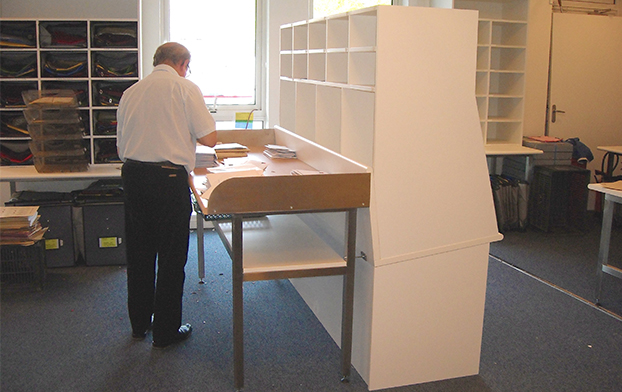
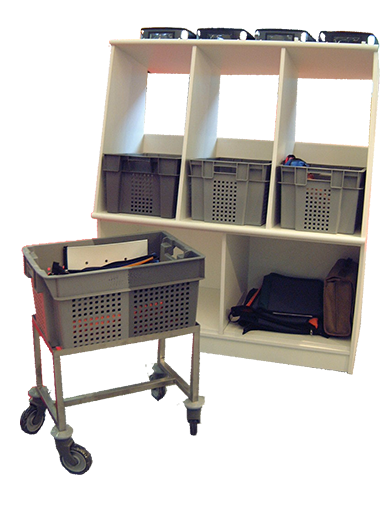
The Outils Océans funnel table is equipped with inclined bin supports and/or integrated individual bin trolleys.
When bins are placed on inclined supports, full bins are smoothly slid onto individual trolleys without load interruption, while empty bins are repositioned to keep sorting operations running.
When integrated bin trolleys are used, they slide out like drawers once the bins are full. Empty trolleys are then pushed back into place beneath the funnels to resume sorting.
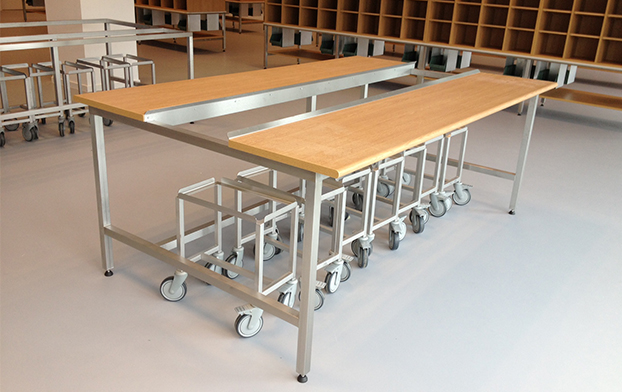
Sideboards provide additional support and safety during operations.
With the Outils Océans funnel table, primary sorting can be carried out according to a tailored number of criteria, all within a compact footprint. The workstation remains consistently operational and productive.
Working heights are ergonomically designed and manual handling is reduced, helping prevent musculoskeletal disorders (MSDs).
After the primary sorting stage, mail undergoes a second step known as fine sorting. This method of successive sorting helps streamline operations. Primary sorting criteria are based on dividing up the different areas of the mailroom. End of sorting criteria correspond to all potential destinations, which may include:
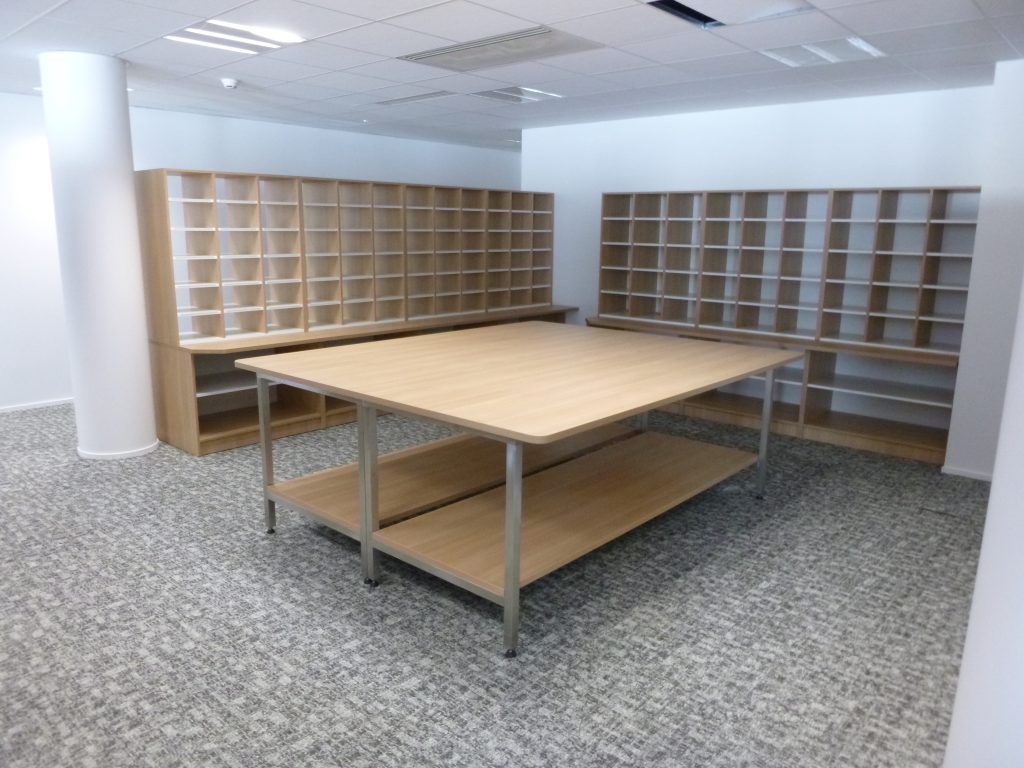
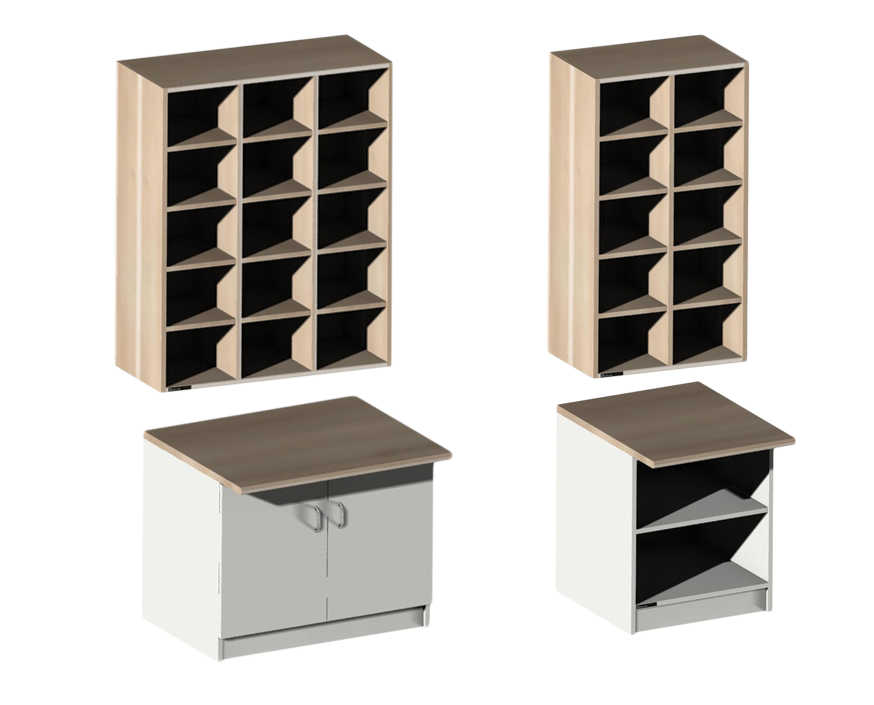
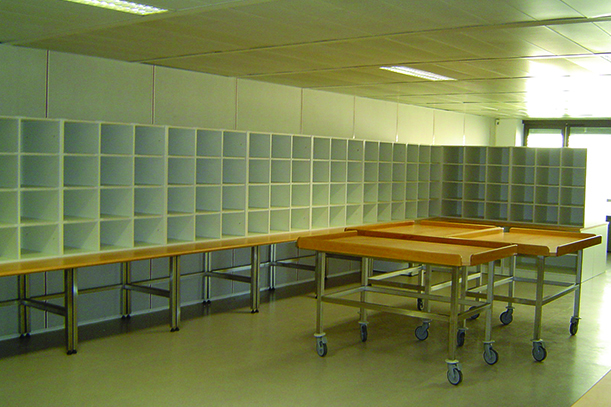
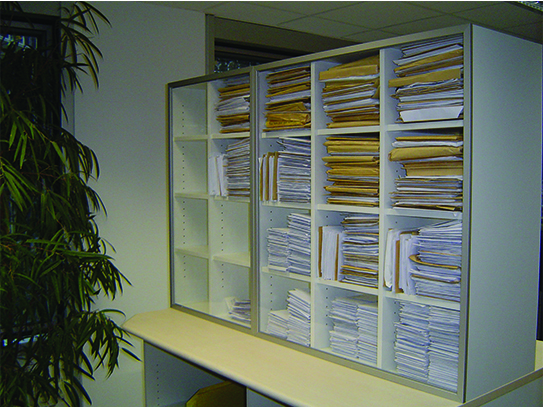
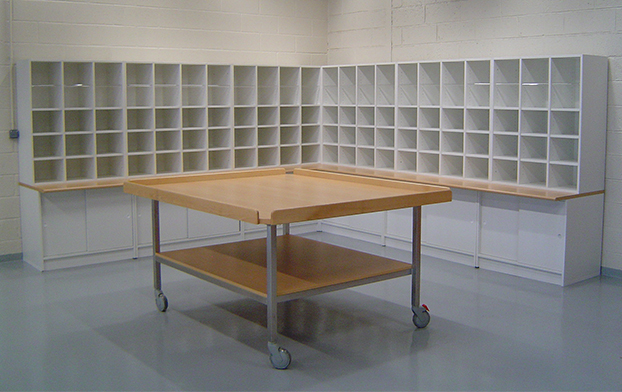
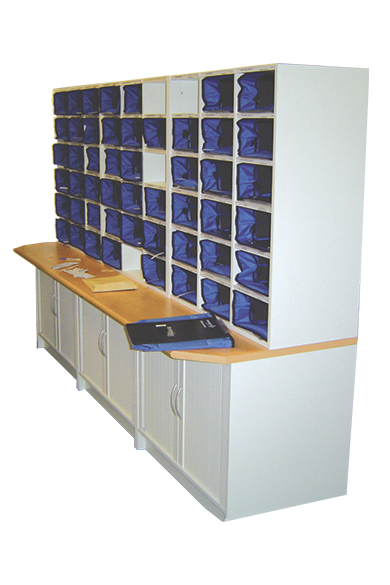
End of sorting criteria are physically represented by a set of compartments, also referred to as slots or pigeonholes. To ensure scalability, we organize sorting plans preferably in modular units.
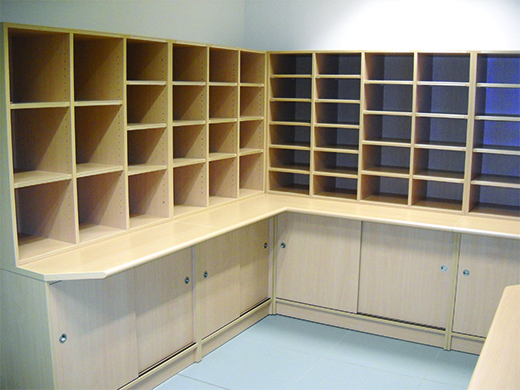
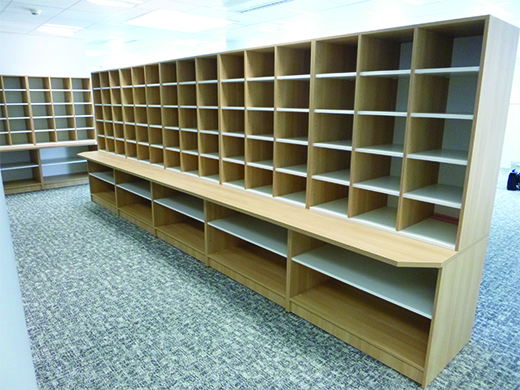
The frame of the compartments is made of 19 mm thick melamine panels with 2 mm PVC edging, ensuring resistance to impacts caused by mail handling, shuttle bags, or pouches.
The shelves can be either wood or plexiglass:
Wooden shelves can be fixed or adjustable in 32 mm increments. The adjustment and locking system is both simple and secure: metal pins fit into a block embedded in the shelf, and a safety flap locks the set in place to prevent any tilting. No tools are required to adjust the shelves.
For plexiglass shelves, we provide specific “wedge” pins.
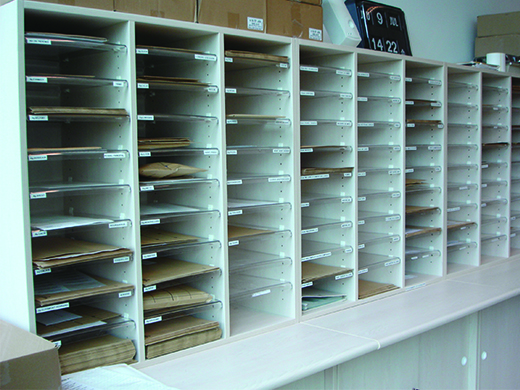
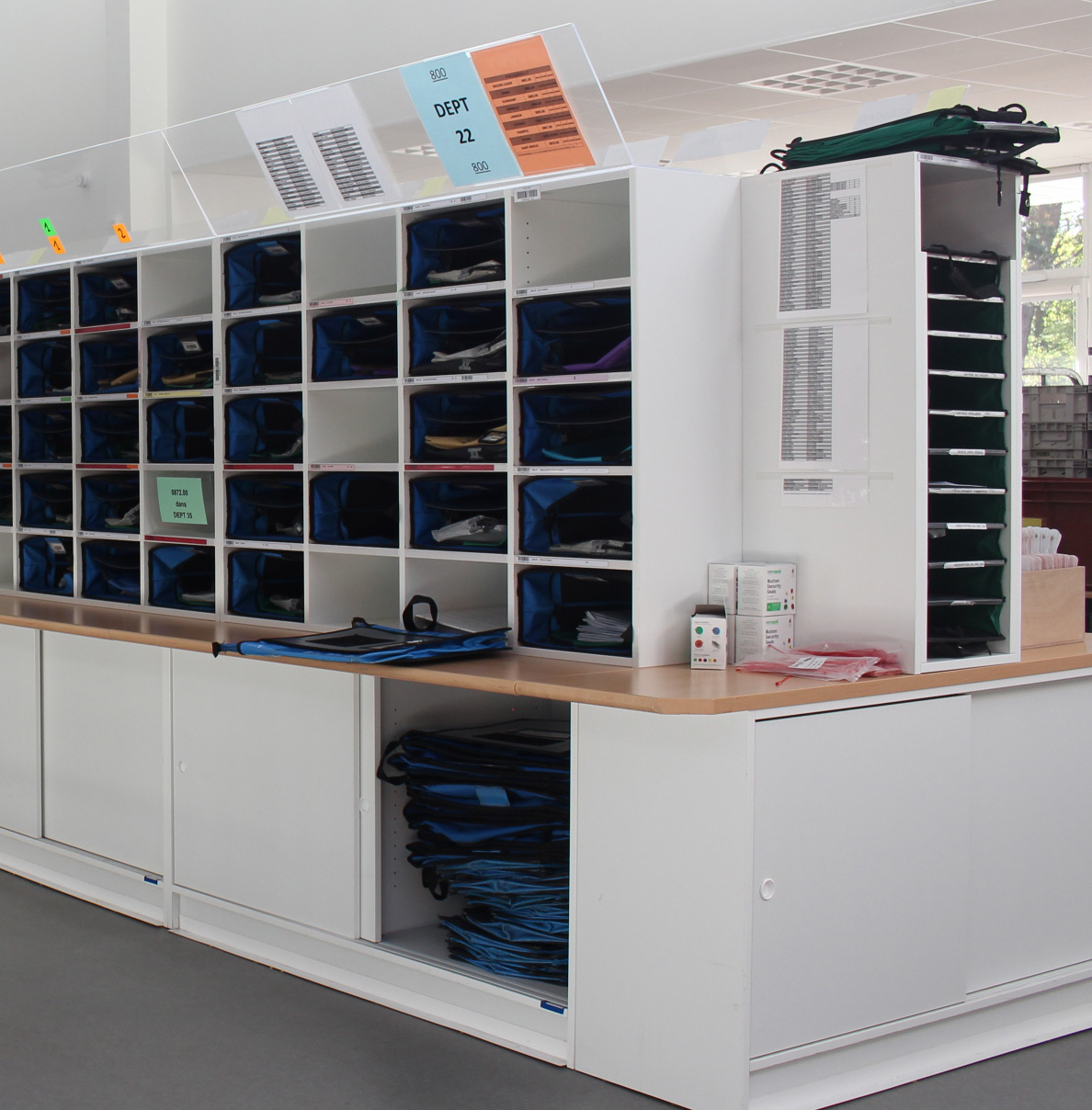
When instructions or lists need to be displayed, we offer plexiglass headers fixed to the top of the compartments, ensuring that information is always clearly visible.
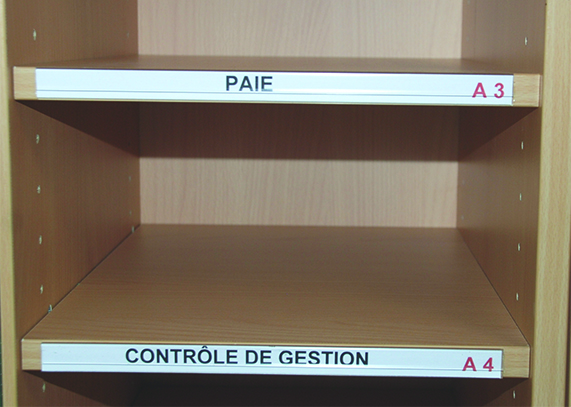
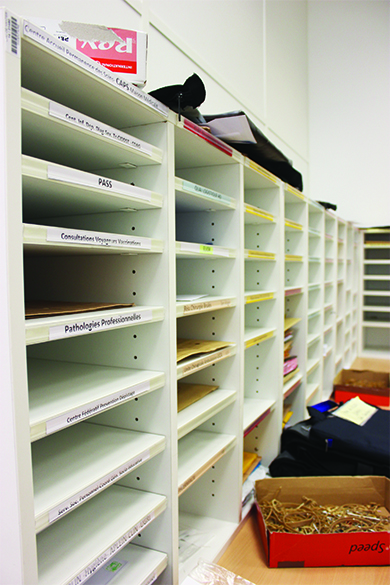
Compartments are clearly labeled with rigid polycarbonate slot indexes.
They allow labels to be easily replaced when a new designation is needed, while ensuring long-lasting durability.
When available space requires placing one or more modules against a window, we add a plexiglass back panel.
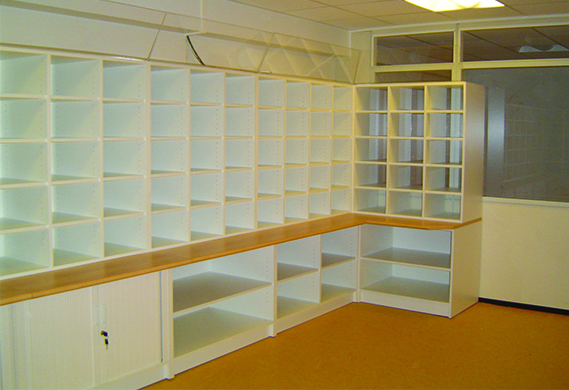
Compartment supports can be either legs or cabinets, with or without a worktop.
Support cabinets can be fitted with sliding doors, PVC side shutters, or locks.
When no worktop is installed, we recommend using mobile trolleys or bin-support carts.
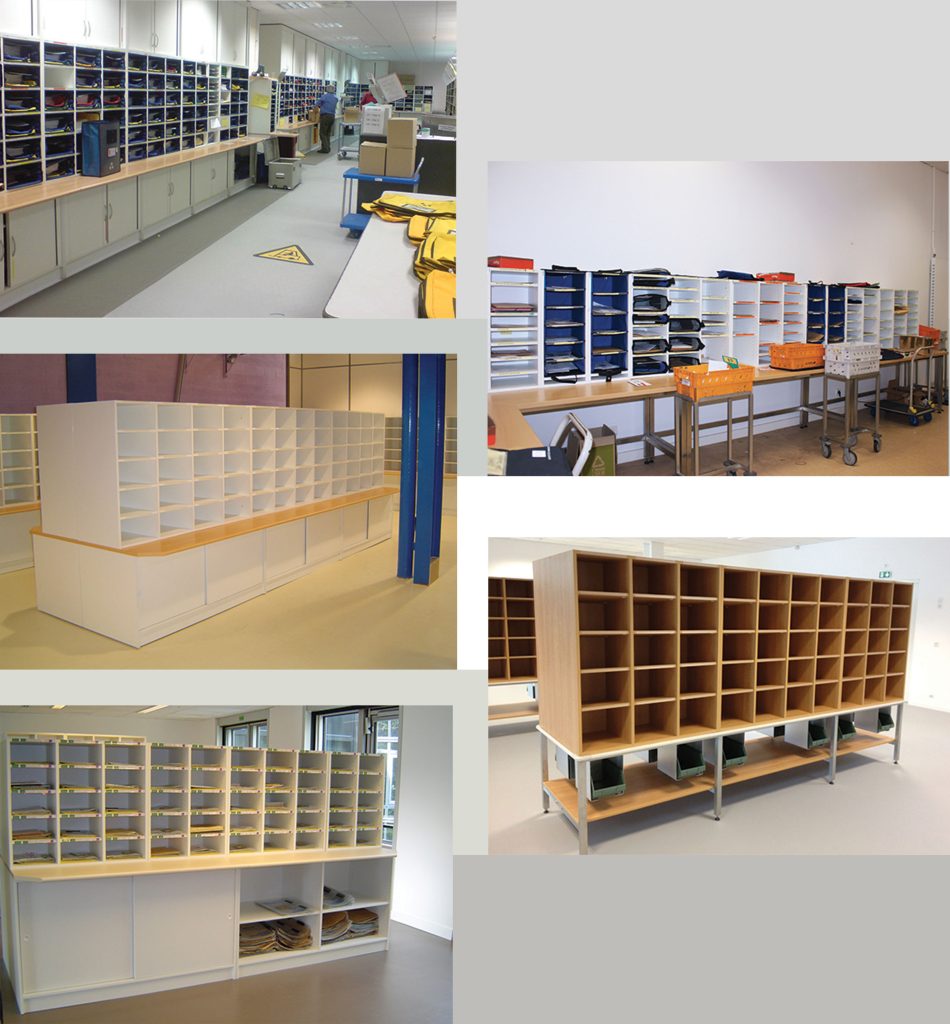
At fine sorting stations, operators usually work standing or with the support of a sit-stand chair, as they need freedom of movement along the row of compartments.
To further optimize ergonomics, we offer height-adjustable frames that adapt to each operator.
These adjustable frames are robust and specifically designed to withstand heavy loads (compartments filled with mail and documents) and repetitive use in production environments.
Adjustment options include:
With electric adjustment, preferred working heights can be saved and recalled for maximum comfort and efficiency.
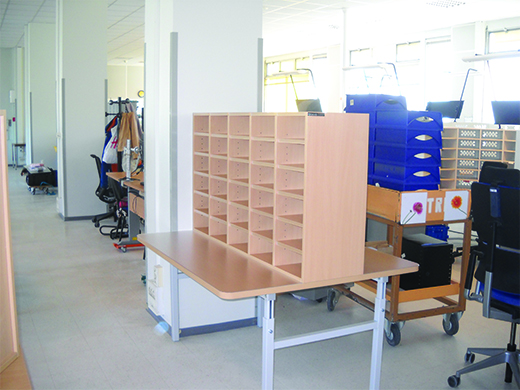
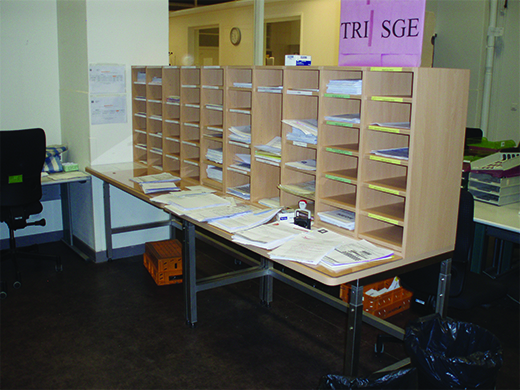
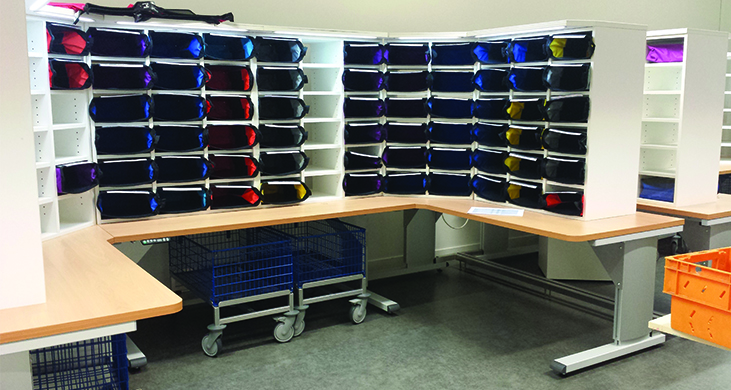
Operators sometimes report visual fatigue at sorting stations during Health, Safety and Working Conditions Committee (HSWCC) reviews.
To enhance user comfort, the electrification of fine sorting stations allows us to integrate LED lighting, improving the visibility of slot labels and documents placed on the work surface.
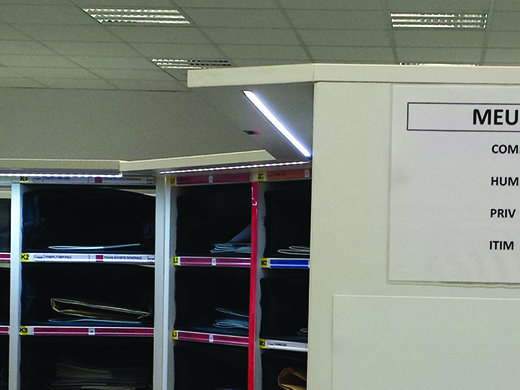
Filling a compartment is not the end of the process — it must then be emptied to dispatch its contents.
That’s why we recommend direct sorting, which consists of placing an open transport container directly inside each compartment.
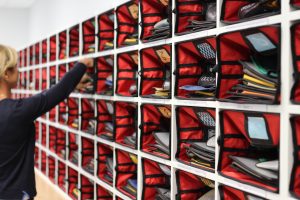
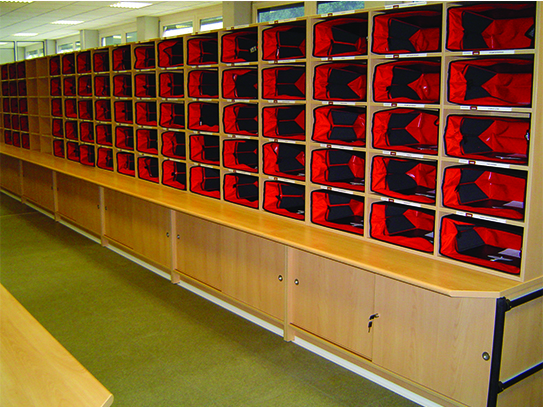
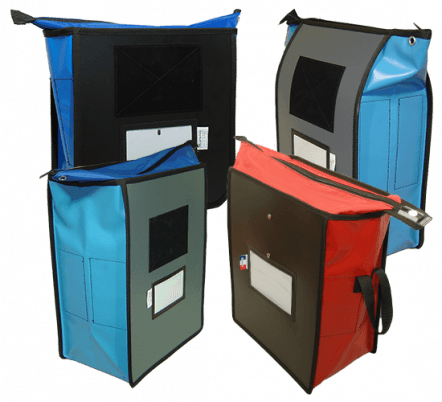
Outils Océans has designed the shuttle bag, perfectly shaped to fit into the compartment with a simple push, without any fastening system. At the end of the sorting process, the shuttle bag is closed in one quick motion, removed from its compartment, and sent on its way.
The shuttle bag can be used both intra-site (within a building) and inter-site (between external sites such as agencies, branches, subsidiaries, or retail outlets).
It helps increase productivity and streamline delivery rounds.
A revolutionary 3-in-1 solution, exclusive to Outils Océans, allows you to sort, deliver, and collect your mail: the Sorter-Shuttle.
With its support column, it functions as a sorting unit in the mailroom.
On its own, it serves as a transport container.
Re-deployed in a column, it becomes a mail point for delivery and collection.
Some mail items do not clearly identify the recipient. As part of specific business processes, documents must be read to detect keywords that help determine the appropriate destination slot. This process is known as investigation sorting.
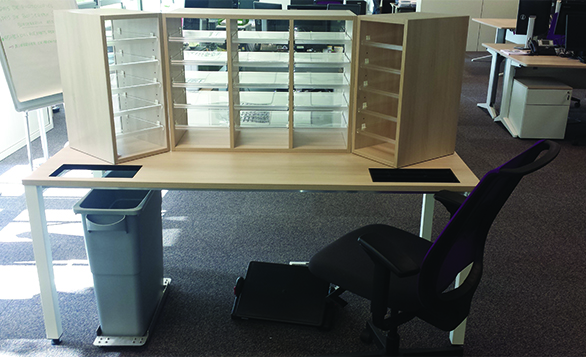
Investigation sorting requires operators to work in a seated position, with a sufficiently large work surface for document reading. The station can also accommodate a PC to search an employee directory or a reference database/knowledge base.
The workstation layout must remain within the operator’s natural reach to avoid excessive arm extension or torso rotation. For this reason, the most common configurations are L-shaped or fan-shaped setups.
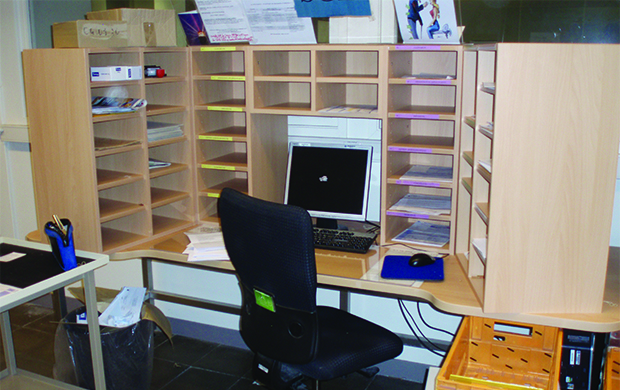
The frame of the compartments can be made of wood.
In this case, we recommend using plexiglass backs and shelves to create a more open environment, allowing operators to see each other.
Alternatively, the frame can be made entirely of plexiglass to maximize brightness. However, this option requires regular cleaning and careful organization to maintain its aesthetic appeal.
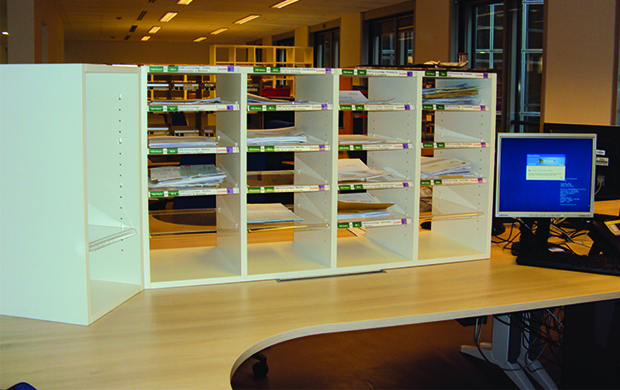
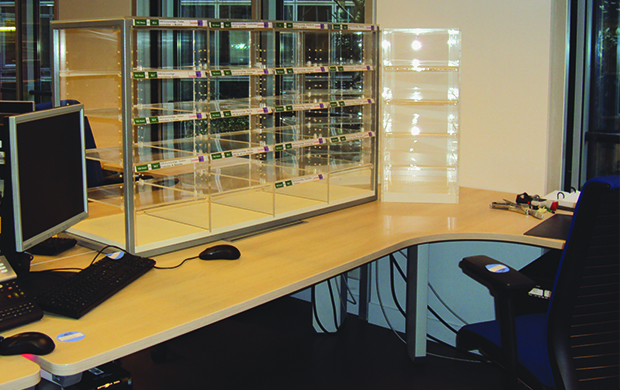
We often see investigation stations dedicated to a single business process being used only for short periods of time.
To optimize workstation usage, reduce the number of investigation sorting stations, and therefore minimize the floor space required, you can assign Outils Océans investigation stations to several sorting plans thanks to our rotating slot indexes.
This system allows you to display up to 4 labels per slot and switch from one sorting plan to another in the blink of an eye!
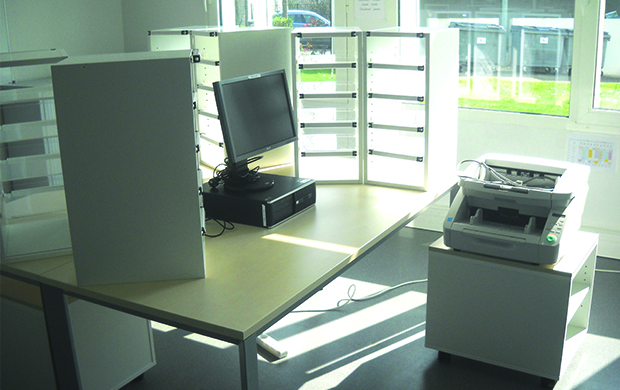
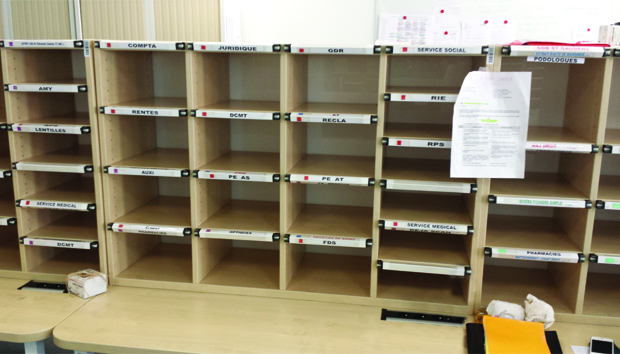
The supports are desk-type, and the frames can be made of lacquered steel, epoxy-coated steel, or stainless-steel tubing.
They can be customized to meet all your needs, including:
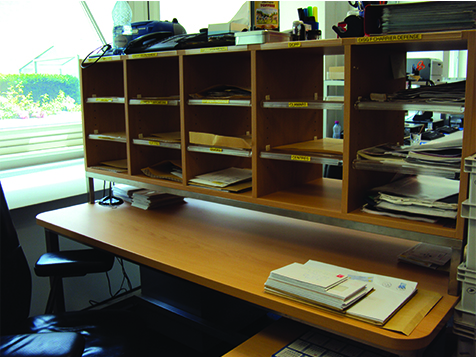
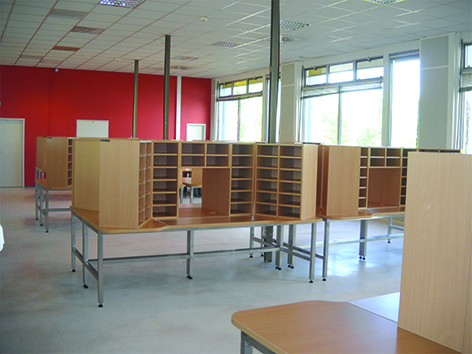
Investigation sorting often relies on experienced operators who know the organization or company structure inside out.
But how can you train newcomers and anticipate the retirement of these key operators?
Investigation sorting is also very time-consuming. When comparing the time spent with the volume of documents processed, productivity is significantly lower than at fine sorting stations.
So how can investigation sorting productivity be improved?
In the previous sections, we reviewed all the sorting stages. But filling a slot is not the end of the process — it must be emptied either to dispatch its contents or to make them available to the mail service.
Whether intra-site (within a building) or inter-site (between an external site, agency, branch, subsidiary, or retail outlet), we recommend using shuttle bags.
Created by Outils Océans, the shuttle bag is designed to fit seamlessly into the workflow…
Within a building, delivery and collection at mail points is an effective way to reduce staff movements to the central mailroom and allow them to stay focused on their core activities.
But what exactly is a mail point?
A mail point is a set of compartments and supports installed on each floor of a building, designed to centralize delivery and collection for an entire floor or office area, depending on the surface.
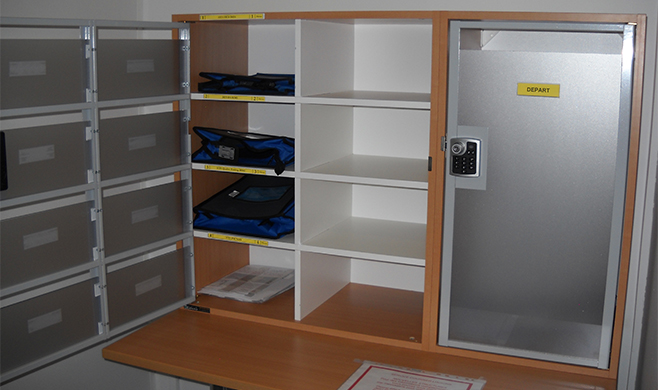
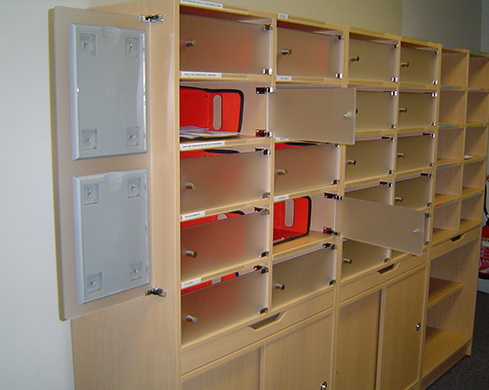
Distribution is carried out through a set of compartments, which may be open or secured with individual doors. For added security, these doors can be fitted with key locks, mechanical or electronic code locks, or RFID badge-activated locks. The individual doors may be made of wood, metal, or clear/frosted plexiglass.
If inter-department exchanges are required at the mail point, slots can be integrated into each individual door.
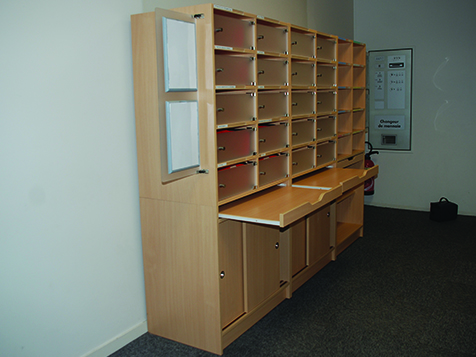
To make operators’ work easier and save time, a collective fan-frame system can be added, allowing the entire mail point to be opened at once.
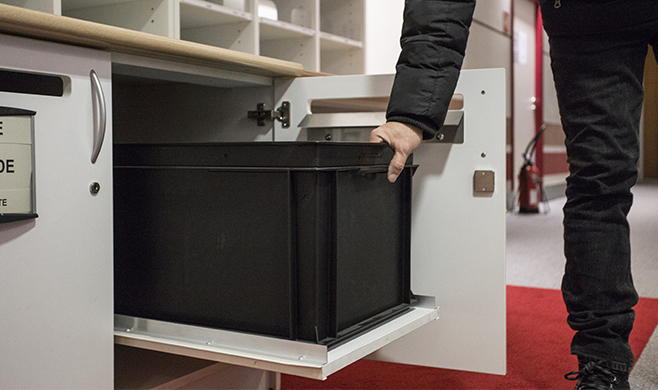
Collection can also be carried out in compartments, bins, or mailboxes integrated into the upper or lower part of the support unit to optimize space.
Inside the collection mailboxes, a bin on a sliding tray can be installed to make handling easier for the mailroom team.
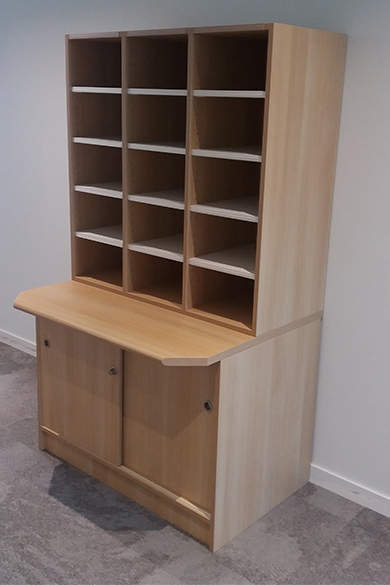
Mail point support units can be either open or fitted with hinged/sliding doors.
They can also be equipped with a fixed or sliding worktop.
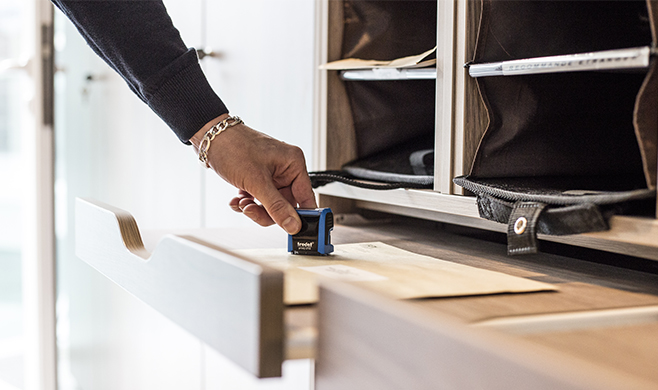
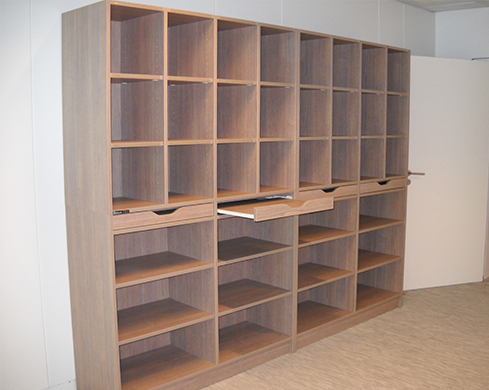
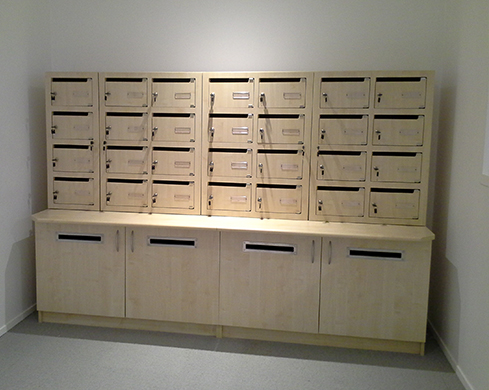
Smart accessories can be added to enhance the setup of mail points, such as paper display holders or electronic display panels.
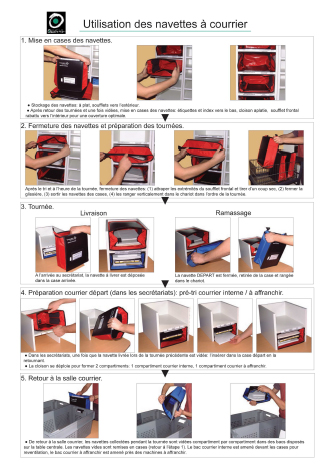
The mail point delivery-collection method is simple to learn and only requires the operator to remember a few key steps:
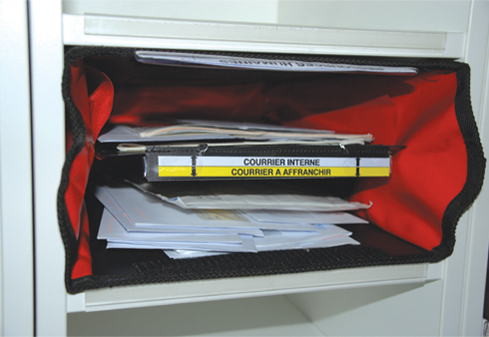
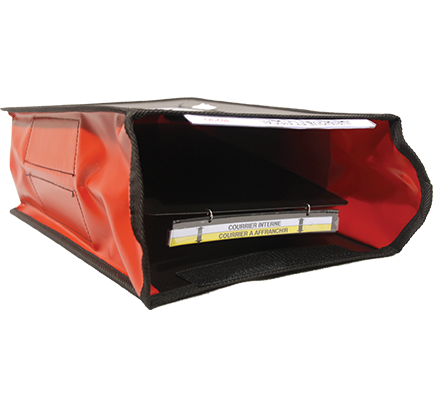
An ingenious alternative is the use of partitioned shuttle bags. In the mailroom, the partition remains flat. At mail points, the partition unfolds when the shuttle bag is turned halfway around, creating two separate compartments: one for internal mail and one for mail requiring franking. Back in the mailroom, each compartment is emptied separately at the correct workstation.
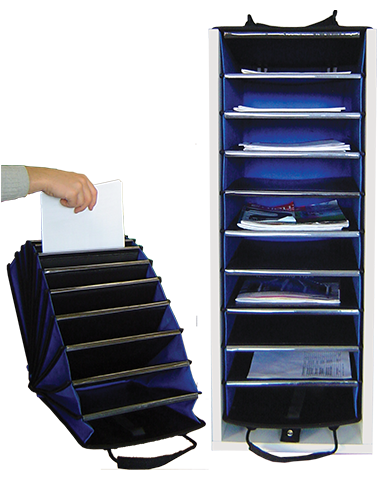
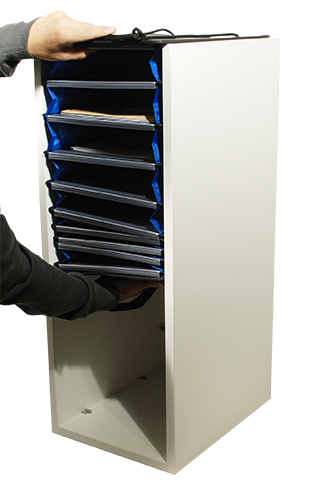
Outils Océans doesn’t stop there! The Sorter-Shuttle is a revolutionary 3-in-1 solution that allows you to sort, deliver, and collect your mail.
With its support column, it serves as a sorting unit in the mailroom.
On its own, it functions as a transport container.
Redeployed in another support column, it becomes a mail point for delivery and collection.
With Traç@flux, you can track every step of the process — from dispatch at the mailroom to delivery at the mail point or hand-to-hand against signature:
If your human resources or budget do not allow for delivery-collection rounds or the creation of mail points, choose self-service access with centralized collection at the mailroom.
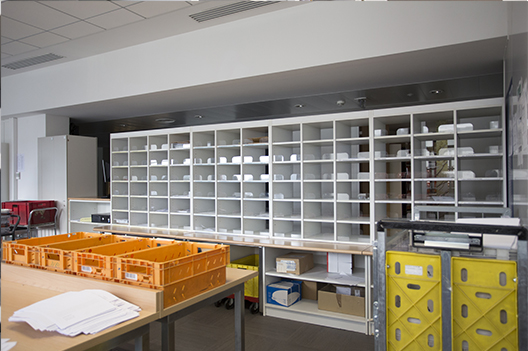
The simplest solution is to install a set of double-entry compartments — with access from the user side and from the mailroom side. This setup also allows the mailroom to be securely closed while maintaining seamless interaction with service users.
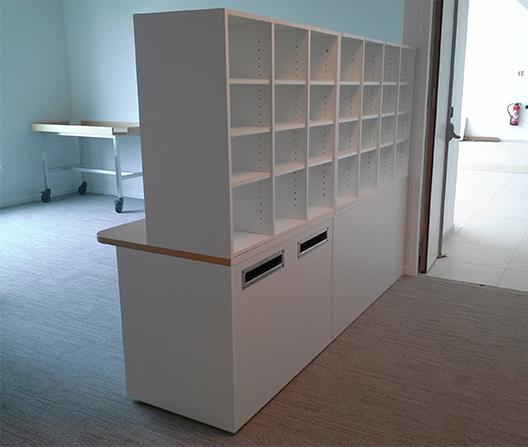
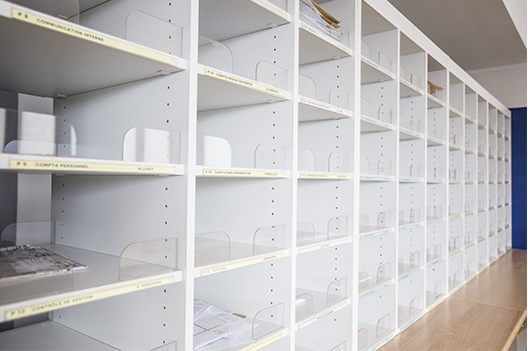
To prevent documents from slipping out of compartments during sorting, plexiglass stops hold the mail securely in place while providing easy handling thanks to a central open grip.
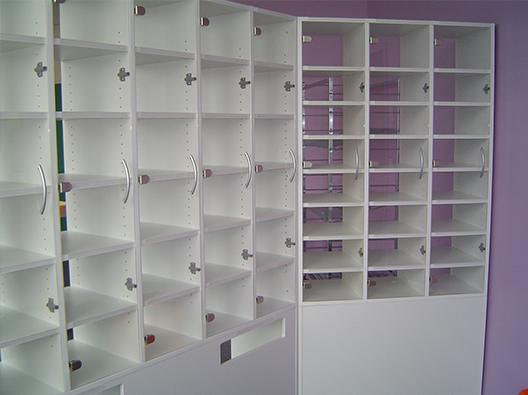
Another option is to install doors for each column of compartments, available in either wood or plexiglass.
As with mail points, to enhance security, the service-side compartments can be fitted with individual doors equipped with key locks…
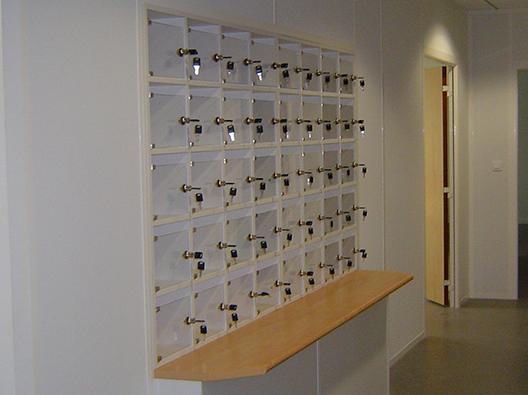
…mechanical or electronic code locks.
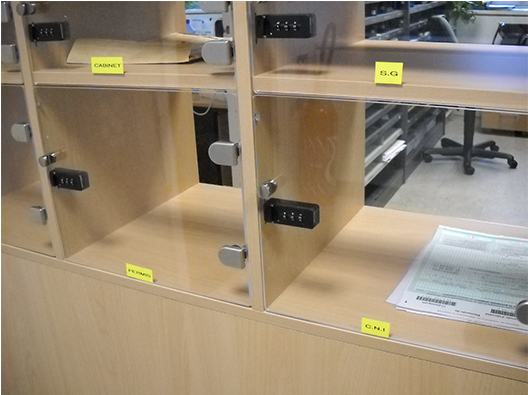
…RFID locks activated by badges. Individual doors can be made of wood, metal, or clear/frosted plexiglass.
If you wish to enable inter-department exchanges, slots can be added to each individual door. On the mailroom side, a sliding shutter can be installed to close off the entire sorting wall outside the mailroom’s opening hours.
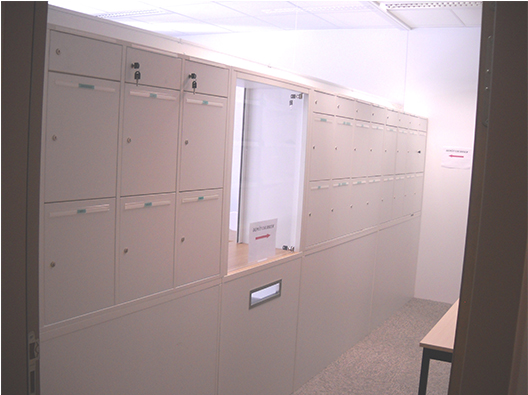
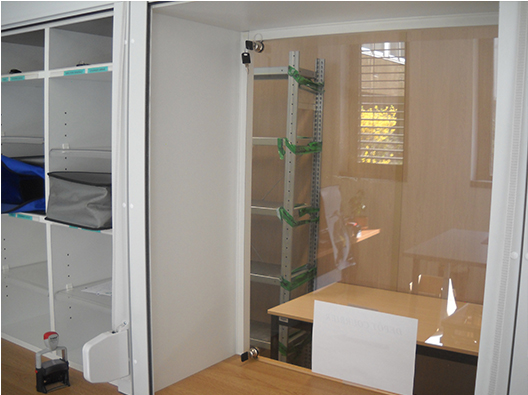
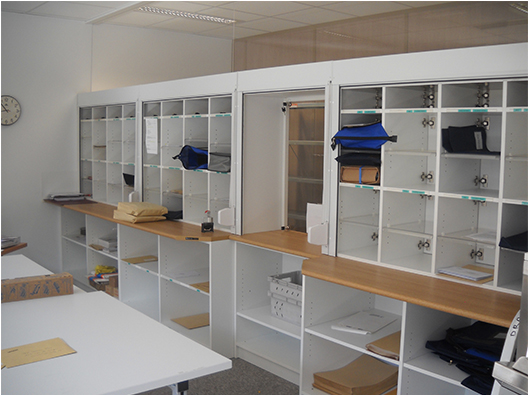
For collection, the ideal setup is to equip the compartment supports with slots on the user side and provide wheeled bins on the mailroom side.
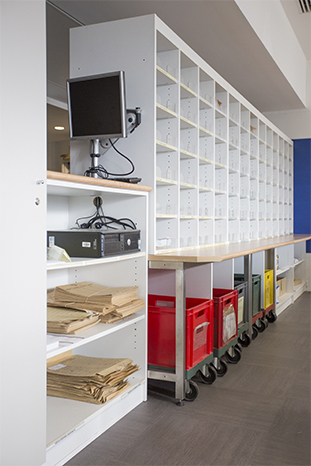
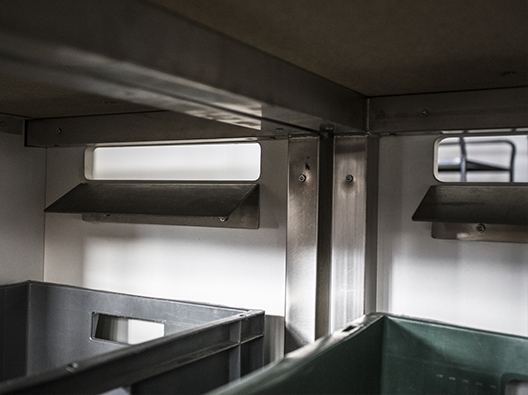
You can thus configure all the necessary sorting criteria for outgoing mail preparation (intra-site internal mail, inter-site internal mail, urgent postal mail, standard letters, registered items, etc.). On the user side, the supports can be fitted with a fixed or sliding worktop.
For service reception, handover against signature, parcel delivery, or bulky items, we recommend installing transfer hatches or reception counters. The reception counter can be closed with a plexiglass door or PVC shutter outside mailroom opening hours to reinforce security.
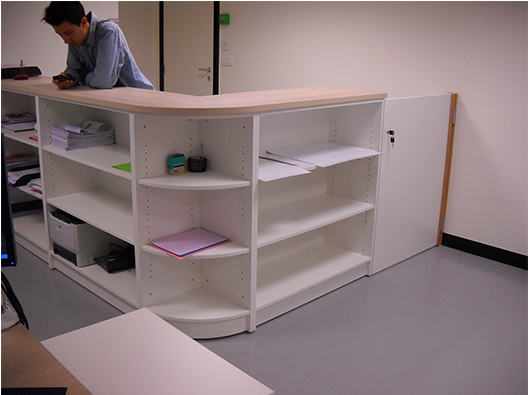
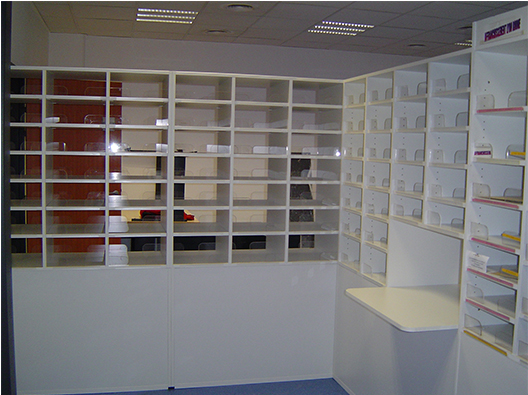
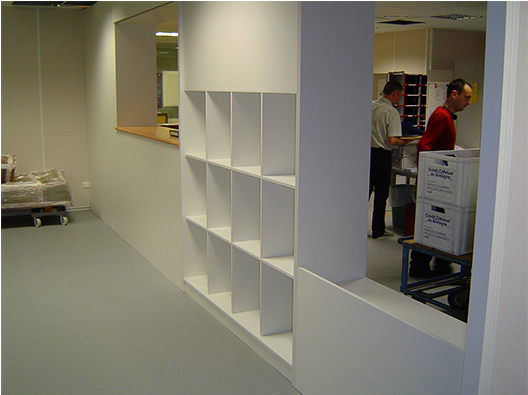
The same applies to the mailroom-side compartments, which can be closed with PVC shutters.
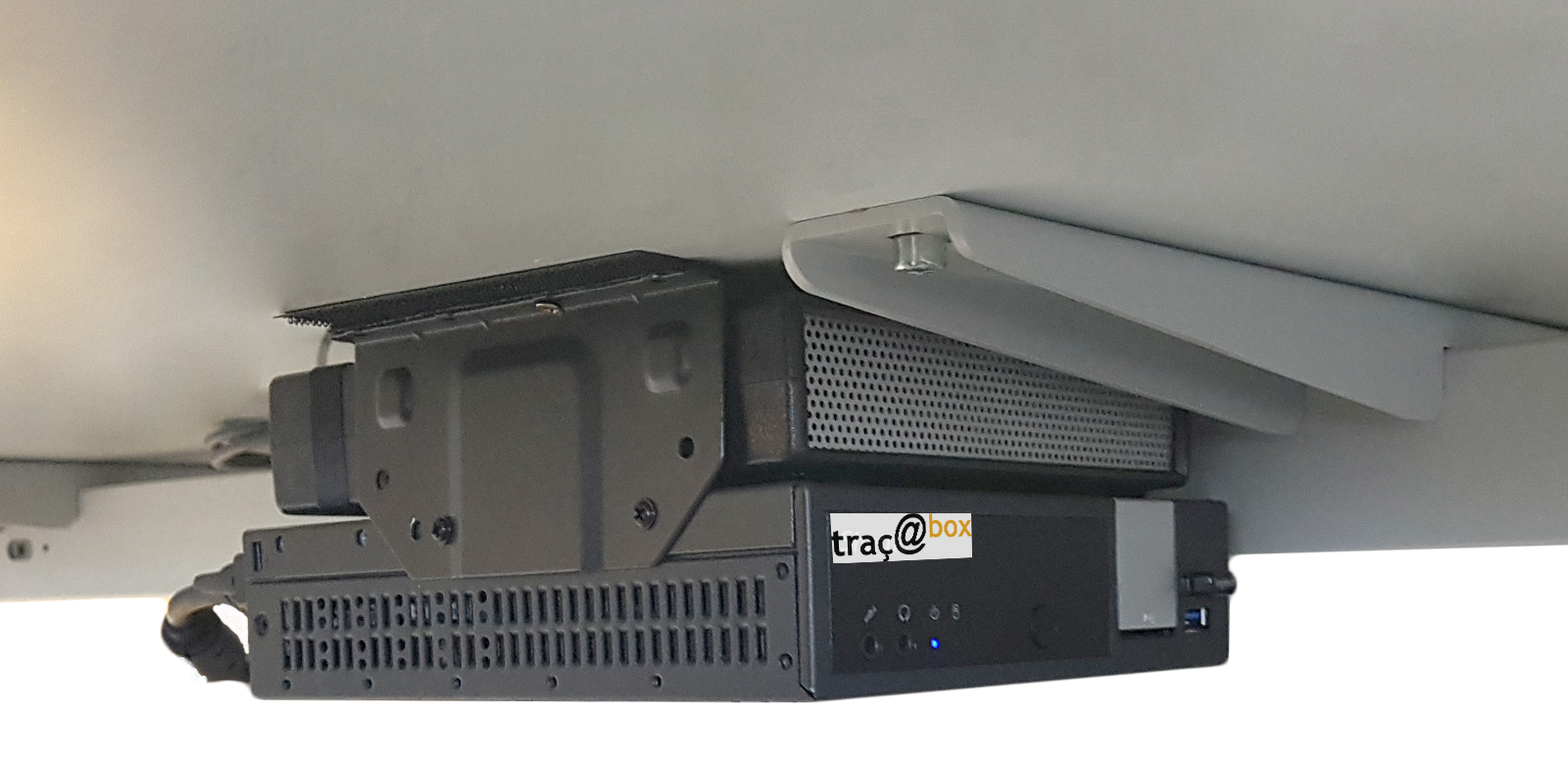
Traceability provided by Traç@flux can also be integrated directly into the reception counter thanks to the Traç@box.
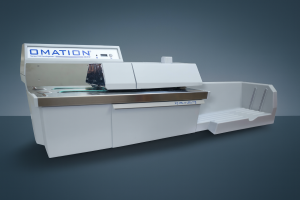
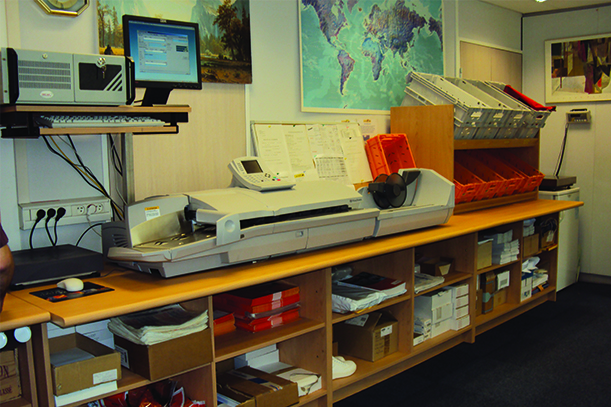
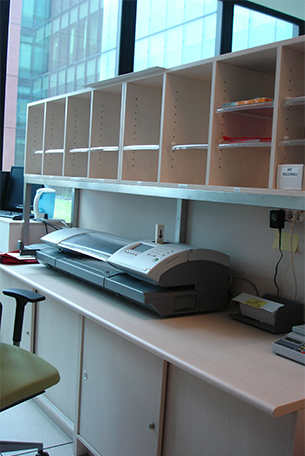
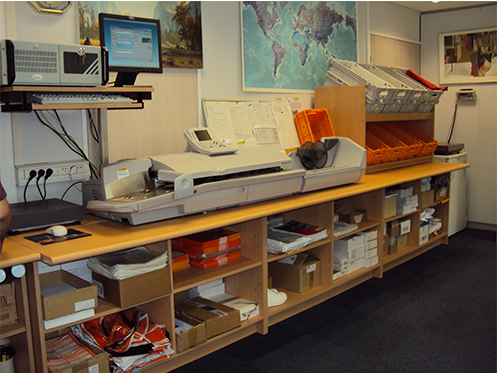
Folding/inserting machines require a specific support height, as these machines are often tall due to vertically stacked input feeders and output sorters. We therefore provide height-adjusted or electrically height-adjustable supports, allowing adaptation to both the operator and the task at hand.
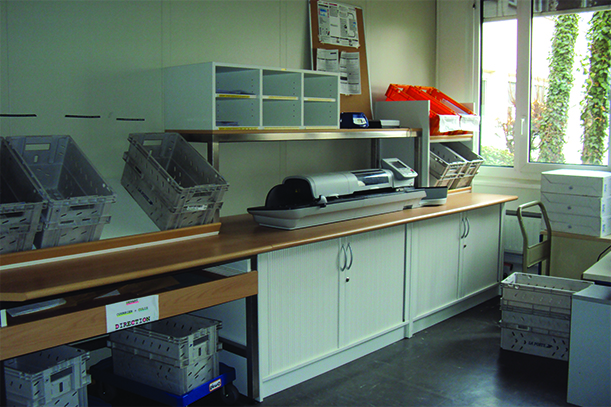
Franking stations must be carefully designed to ensure efficient and productive workflows. The support is of course intended to hold the franking machine, and as such must be built to withstand heavy loads and machine vibrations. But it is also essential to allow for pre-sorting before franking and for organizing mail into postal trays once processed.
Pre-sorting before franking consists of separating envelopes according to size and postal rates. To benefit from bulk-mailing rates, it can also be useful to group envelopes of similar weight.
For this purpose, we offer inclined bin supports or sorting compartments.
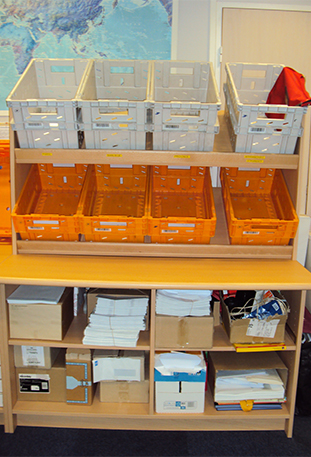
To simplify cost allocation through franking accounts, we recommend using prepaid-mail pouches, partitioned shuttle bags, or postal trays compartmentalized with our indexed dividers.
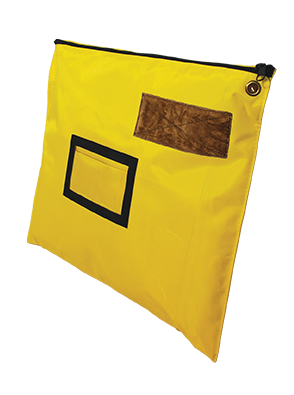
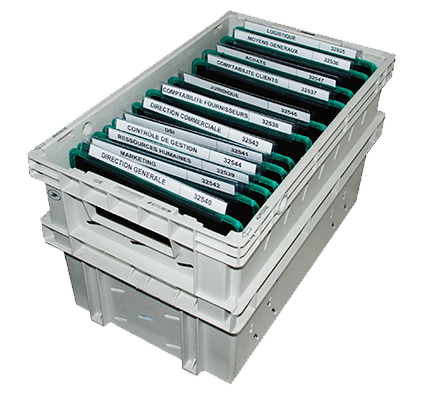
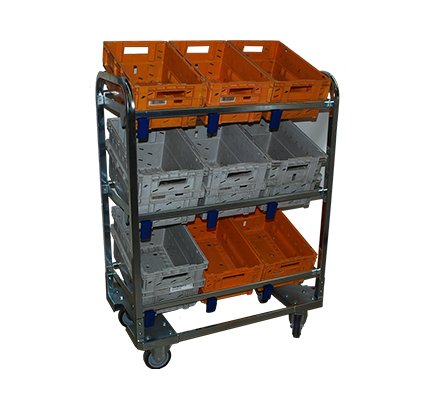
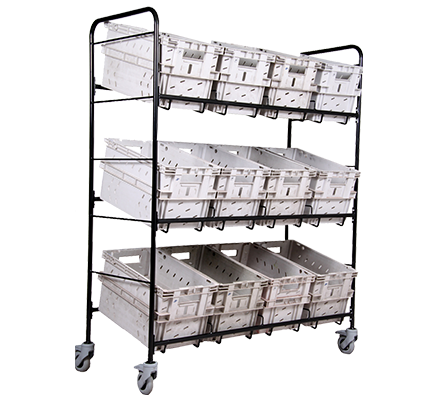
The organization of mail at the output of the franking machine also requires separation by destination and postal rates to ensure proper preparation for pickup by the postal service.
Our bin-support trolleys or fixed inclined bin supports are perfectly suited to this function.
To optimize space and storage, franking supports are available in a wide range of versions:
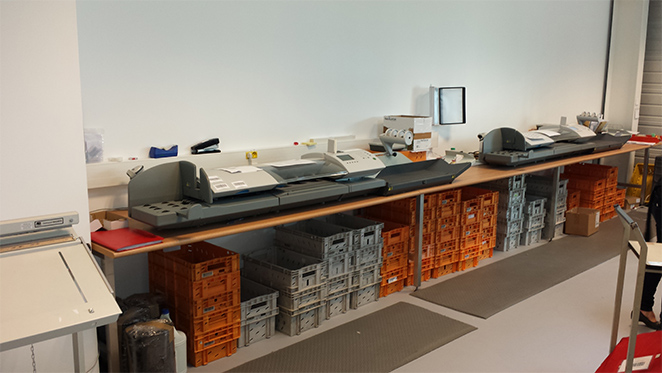
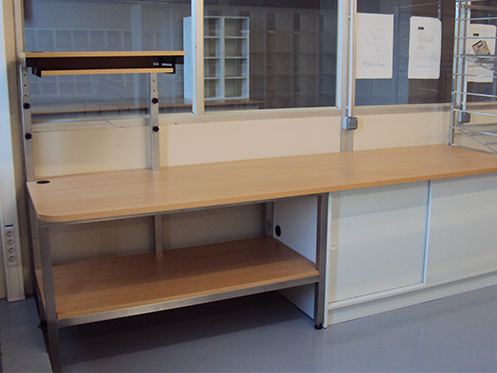
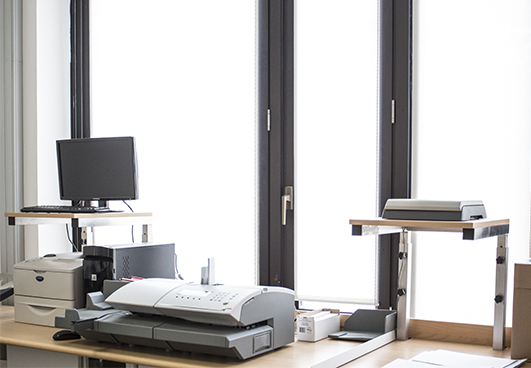
To complete the layout of your mail and logistics area, we also design custom office furniture, dedicated storage rooms, and comfortable break areas.
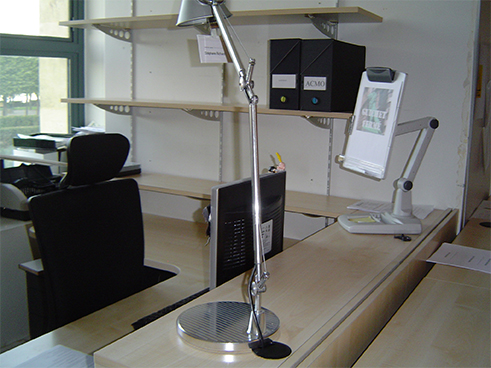
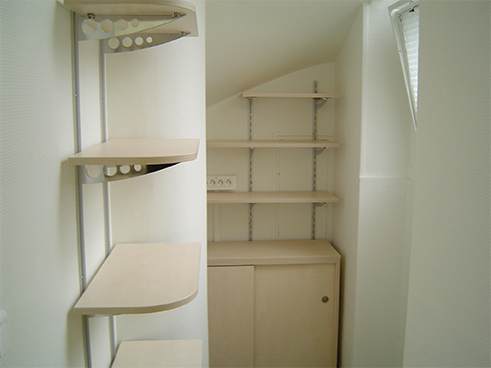
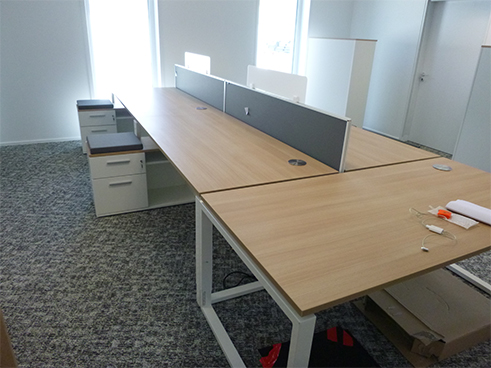
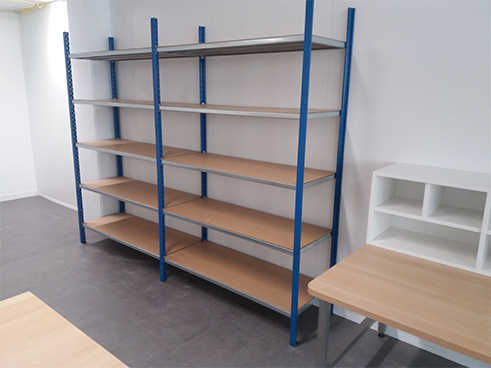
We also provide fit-outs for specific areas such as:
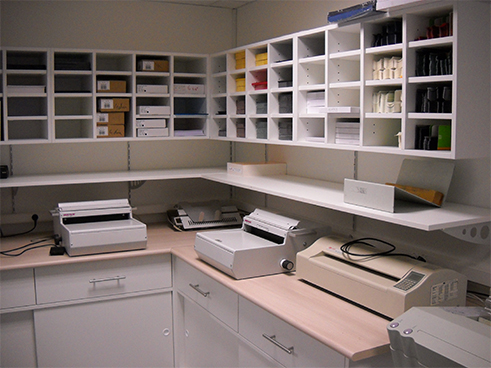
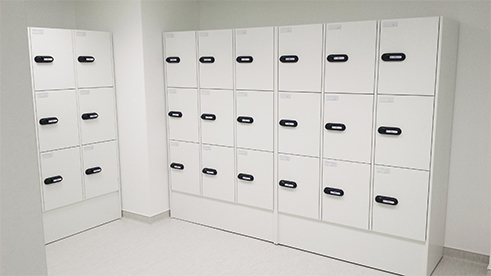
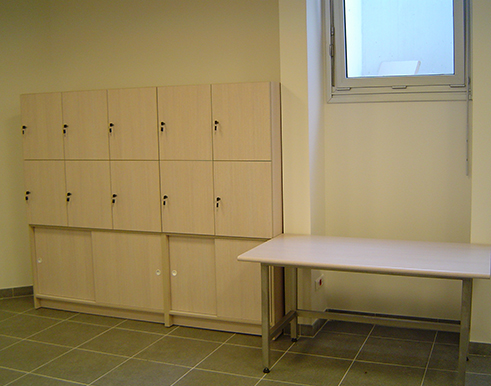
As standard, our furniture comes with a white frame and desktops available in 30 colors/finishes.
On request, we can manufacture your furniture in a much wider selection of finishes from the Egger range.