

Resource Management
From the product design stage, Outils Océans considers the type and quantity of raw materials used, as well as their environmental impact.
Whenever possible, we prioritize materials that are low-polluting during production and recyclable at end of life.
Outils Océans implements measures to reduce packaging and give a second life to certain packaging materials.
We also raise employee awareness about environmentally responsible practices, such as reducing material and energy consumption, sorting waste, and reusing paper.
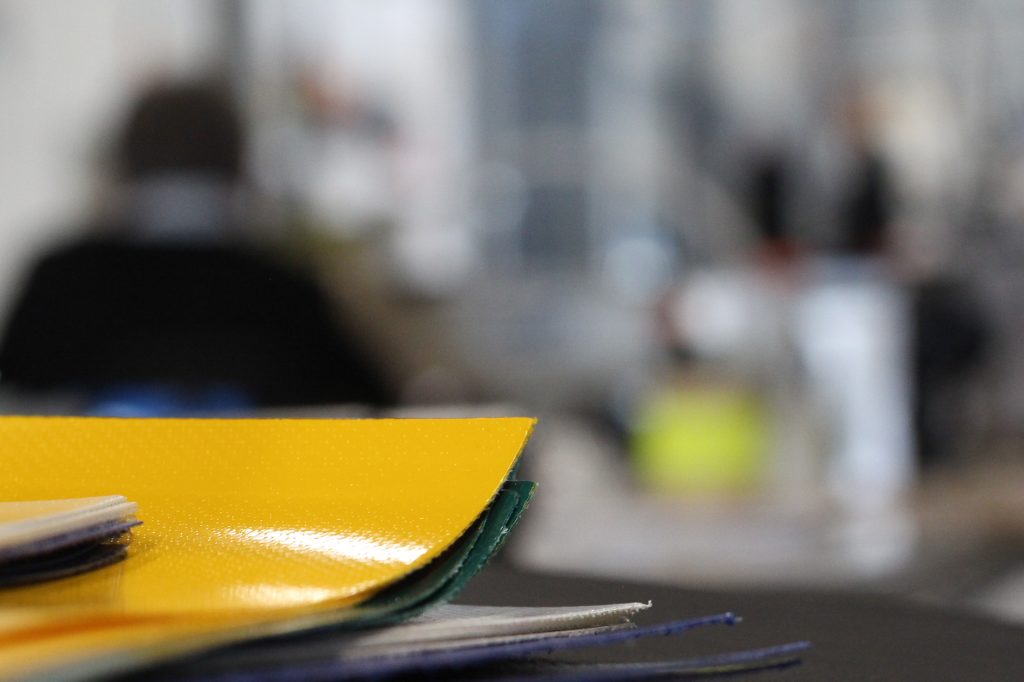
Eco-Design
Our design office optimizes the use of materials and resources throughout the product development process. Our products are designed to be repairable, ensuring maximum service life and better return on investment.
Product Life Cycle Assessment
The Life Cycle Assessment (LCA) of a product aims to systematically evaluate its environmental impact from cradle to grave—that is, by analyzing all material and energy flows in and out at every stage of its life cycle, from raw material extraction to final waste disposal.
LCAs have been standardized by ISO norms (14040 to 14043) since 1994.
Using reusable containers significantly reduces environmental impact.
With Outils Océans’ Repair Service, the LCA is further improved, leading to a substantial reduction in the overall environmental cost.
Choose reusable containers and cut your annual environmental impact by a factor of 100 to 200 !
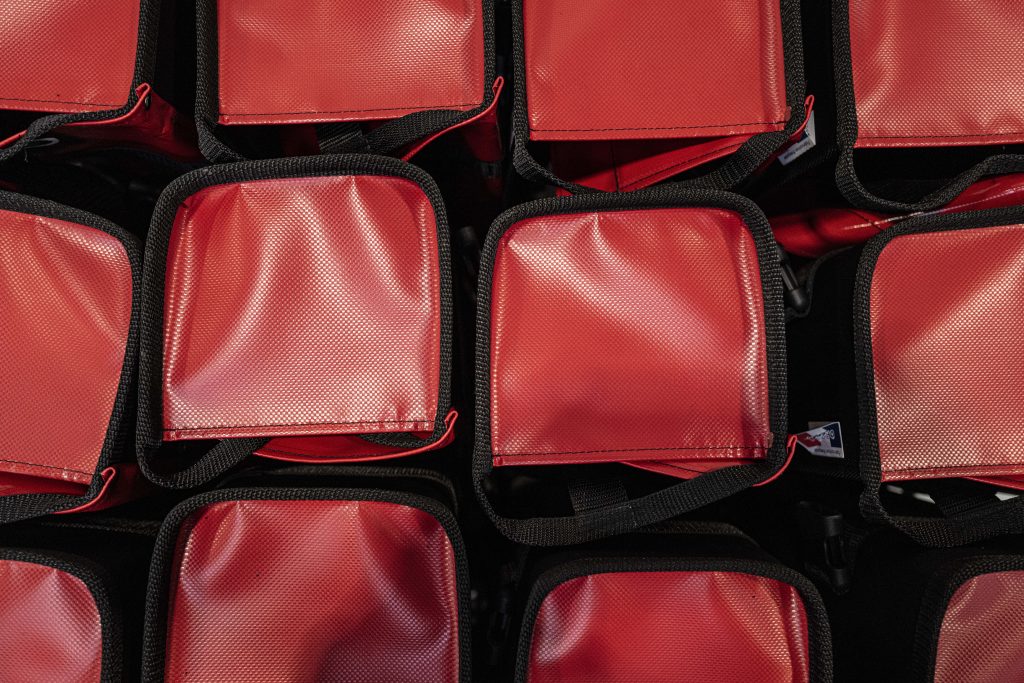
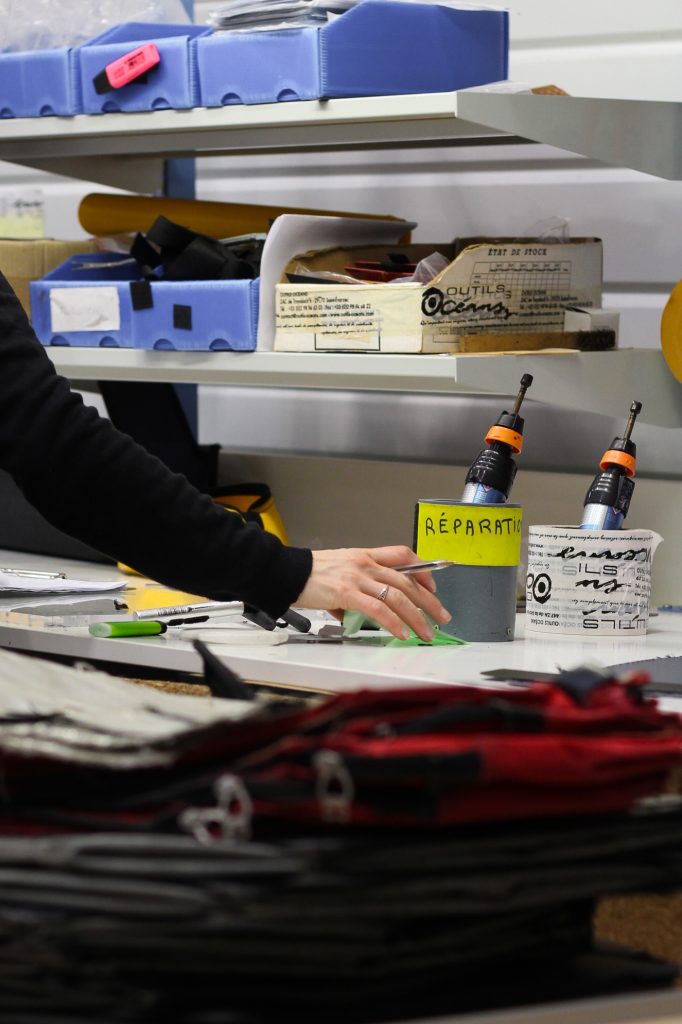
Keeping Your Equipment Operational: After-Sales & Repair Service
Consider using our repair service to give your bags a second life and reduce their environmental impact.
Products received by the repair department are pre-sorted by category and classified as “Repairable” or “Non-repairable” based on standardized criteria, including:
- The number of tasks required
- The average time needed for each task
- The time needed to manufacture a new equivalent product
- Whether the product has already been repaired, and how many times
Reuse
Do you have products in good condition that you no longer use? Don’t throw them away—contact us !
Let your Outils Océans representative know; we can connect you with new users who could benefit from them.
Here are a few inspiring examples of reuse in action:
- Société Générale – Orléans Service Center
This site no longer used its “Sac Navette” bags due to the absence of direct delivery routes to branches.
We connected them with the carrier Sterne, enabling the reuse of these bags in a new logistics chain.
- Crédit Agricole Nord de France
This client had upgraded its “Sac Navette” fleet to a new model with a front index window and no longer wished to use the older version. We facilitated contact with the Sterne carrier to give the unused bags a second life.
- Banque Populaire Val de France
This client had a stock of unused pre-sorting pouches.
The Outils Océans sales team connected them with other interested clients and, in some cases, helped organize the return and redistribution of the stock.

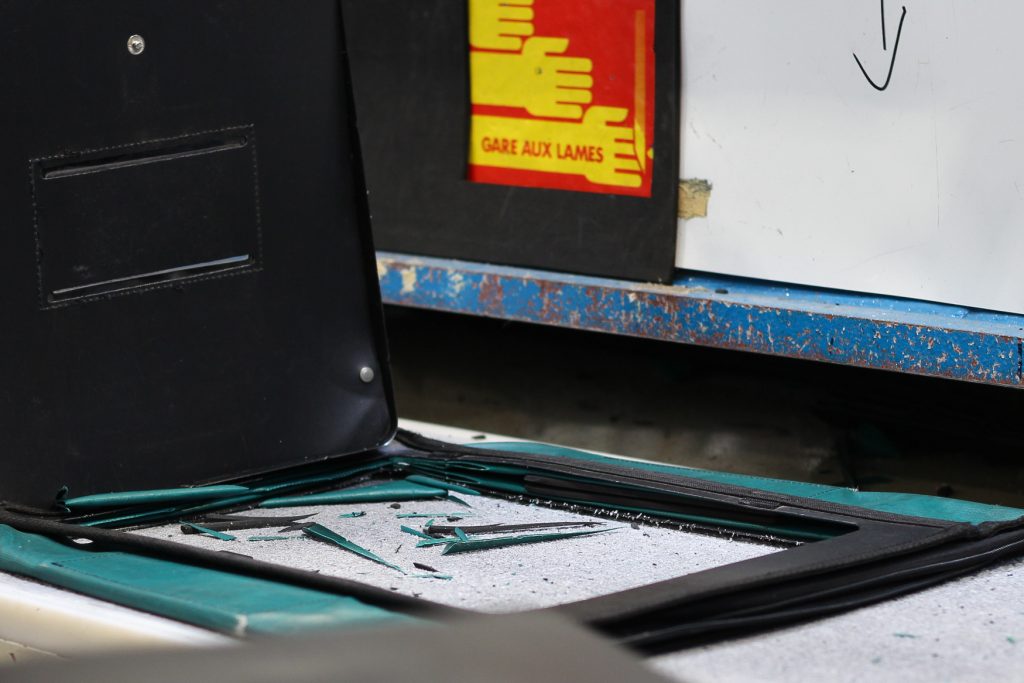
Disassembly and recycling
Recycling requires the separation of materials, which means disassembling the products beforehand.
Depending on the product type, materials are separated using a press and cutting dies, or a nibbling machine.
For products manufactured up until the end of 2021, we achieve a recycling rate of 60 to 70%, including:
- Plastic plates: Polypropylene (PP) and Polyethylene (PE)
- Foams: PE, EVA, PU
- Metal accessories: sliders, snap fasteners
For products manufactured from 2022 onward, made from recyclable mono-material PP fabric, we will be able to recycle up to 98% of the material once the products reach end of life.
Metals are sent back to our accessory suppliers for reuse in their own manufacturing processes.
Plastics are either sent to our suppliers for reintegration into production, or ground and repurposed by a local partner who transforms them into items for homes and public spaces, such as:
- Kitchen countertops
- Seating surfaces