

Manufacturing Process
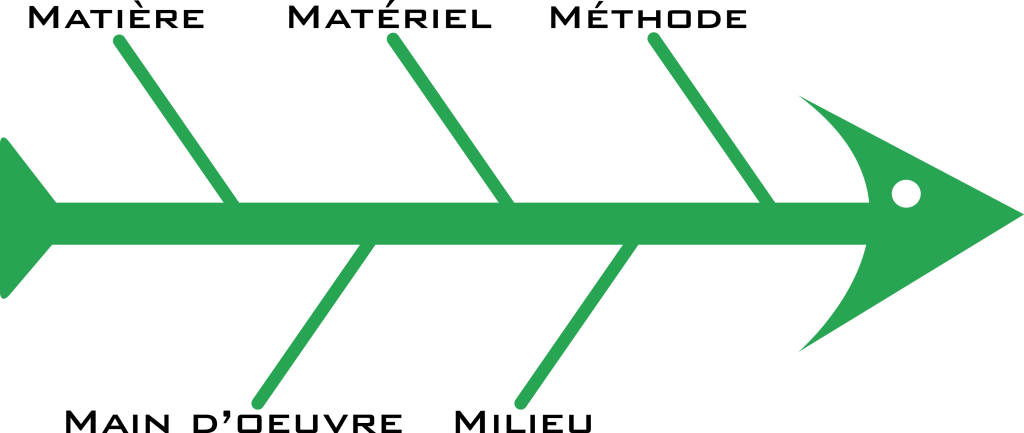
Pour permettre la mise en production dans To ensure smooth and efficient production, we coordinate the 4 Ms:
- Materials
- Manpower
- Machines
- Methods
Our workshop coordinator is responsible for managing the production schedule and safeguarding the unique know-how of Outils Océans.
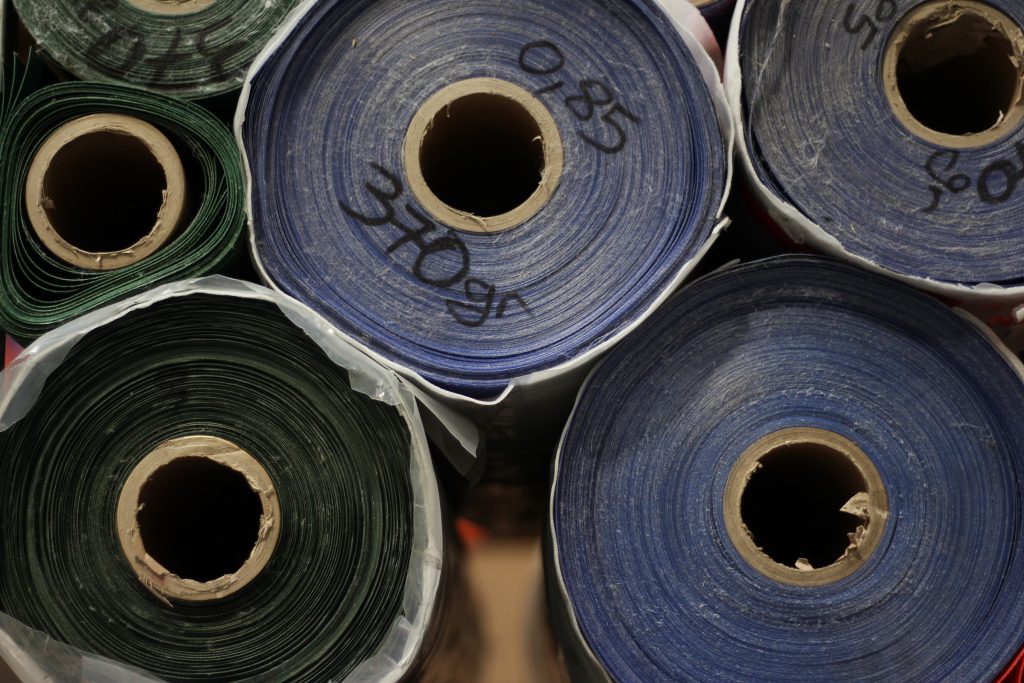
Receipt of Raw Materials
Each year, we use :
7700 m2
10 T
370 000
90m2
Upon delivery, materials are inspected for compliance. Batches are identified to ensure full traceability.
The receiving area is equipped with:
- 1 loading dock for heavy trucks
- 2 docks for light vehicles
- Handling equipment, including a winch to mechanize unloading operations and improve working conditions
Cutting and Thermoforming
The cutting plan is designed to reduce material consumption and minimize waste.
Once the materials have been received, inspected, and identified for traceability, we begin the cutting process.
For single items and small production runs, we use a digital cutting machine. For larger volumes, a press and cutting dies are used on stacks of 10 to 20 layers of material, according to the cutting plan defined by our design office, always with the aim of minimizing offcuts.
We collect the offcuts, shred them, and send them back to our suppliers so they can be reintegrated into their production processes.
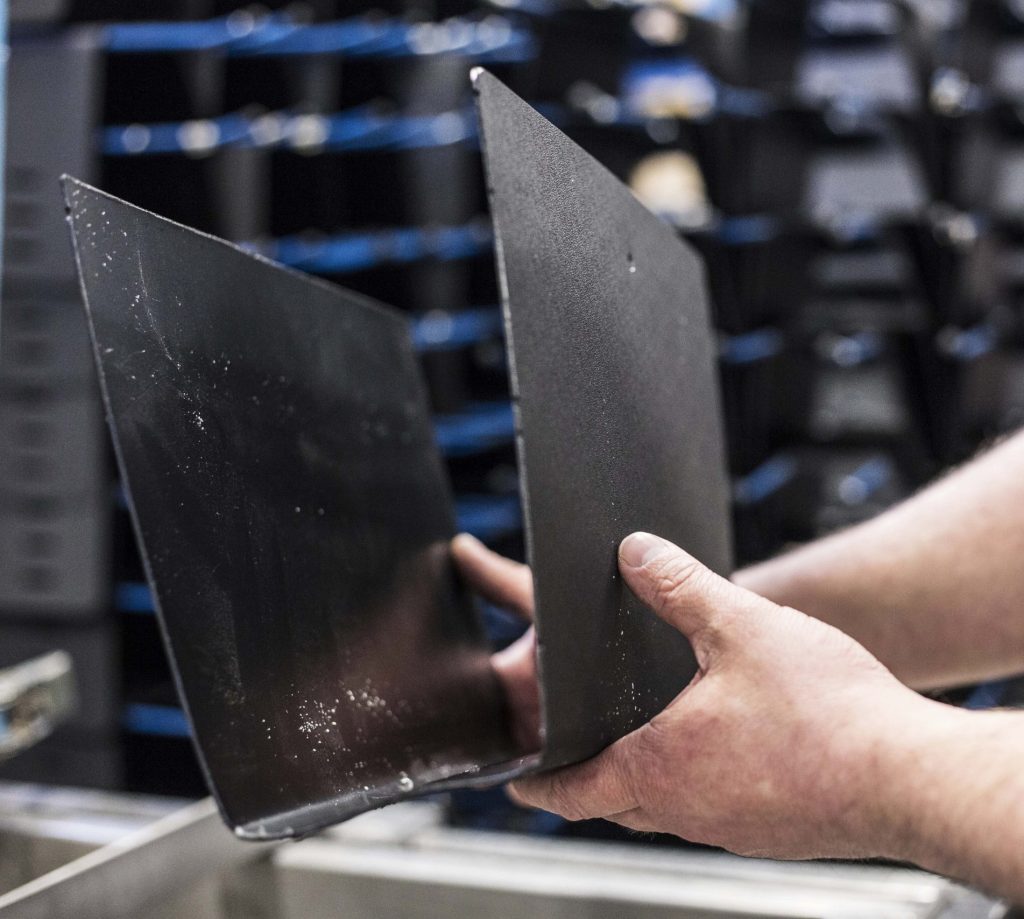
The Outils Océans storage concept is built around a semi-rigid shape-memory frame, which is formed using a thermoforming process.
HF and Ultrasonic Welding
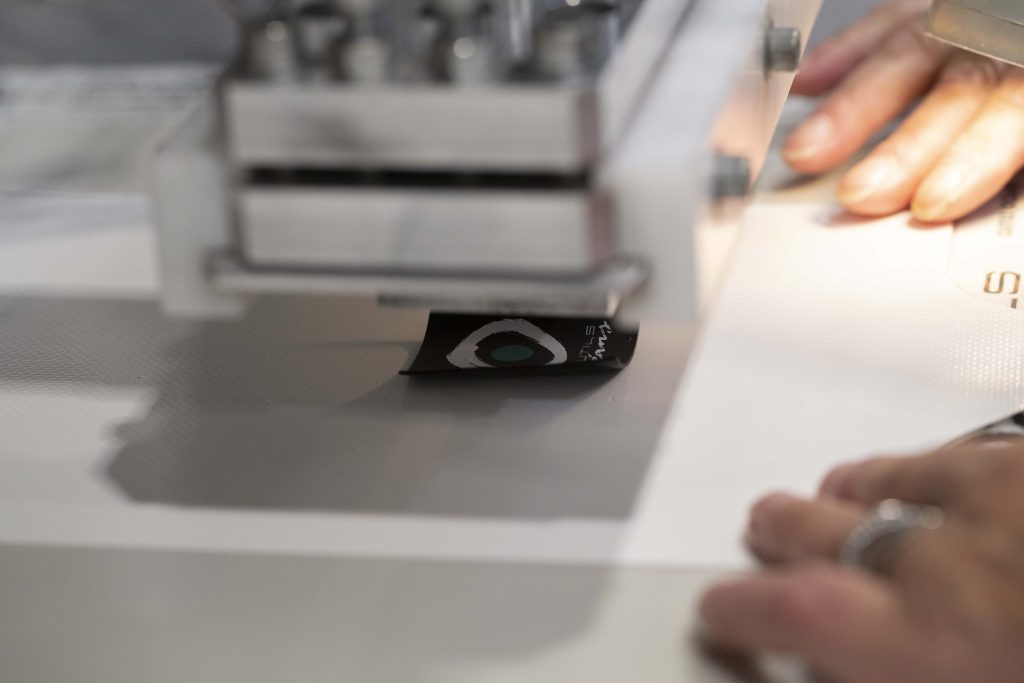
The cutting workshop includes high-frequency (HF) and ultrasonic (US) welding stations.
HF welding is used on PVC materials, particularly for the creation of windows or portholes, and for applying logos to products.
Ultrasonic welding is used on felt, notably for the production of semi-finished goods for industrial applications — for example, air filters for the automotive sector.
Confection
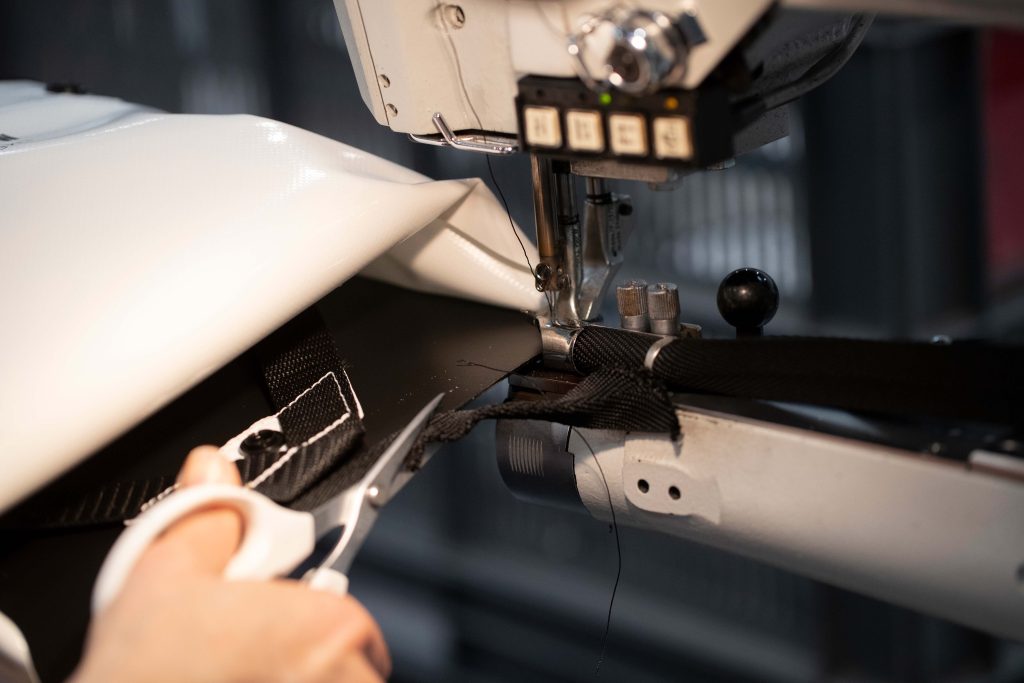
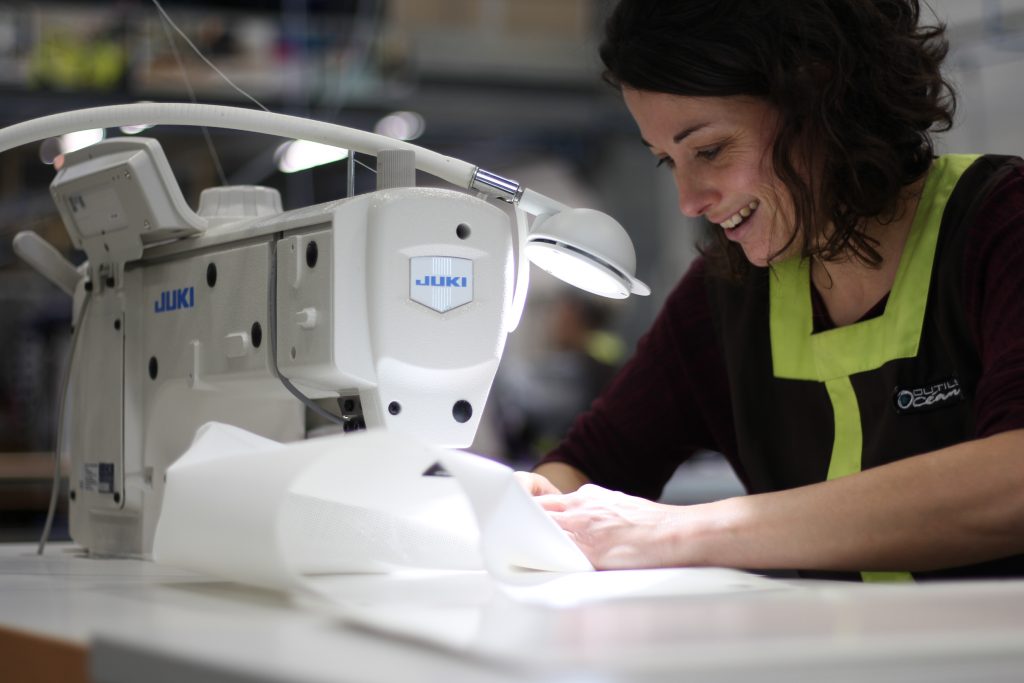
In the sewing workshop, all sewing machine operators are multi-skilled. They are capable of carrying out every assembly step involved in a product’s construction.
This versatility makes their work more varied and engaging, and it also facilitates the scheduling of production orders.
The machines, however, are specialized by task. Our equipment includes :
- Dedicated sewing lines, such as those used for preparing zippers on flatbed machines ;
- Sewing automats for repetitive flat operations like applying windows, handles, straps, or anchoring points ;
- “Post-bed” (cylinder arm) machines, which enable the transformation of 2D products into 3D assemblies ;
- Binding machines for final edge finishing.
At the end of the production line, we have a dedicated set of machines for fitting accessories such as rivets, eyelets, safety locks, and snap fasteners.

Quality Control and Packaging
At the end of the production process, each product undergoes a visual quality check along with final finishing operations such as heat-setting or turning products inside out, trimming thread ends, and testing fasteners.
Quality control and packaging are carried out directly by the sewing machine operators themselves.
Production Team
The production team is made up of 15 people :
- 1 Maintenance Technician
- 1 Workshop Coordinator
- 1 Cutting Supervisor
- 1 Sewing Automat Supervisor
- 1 Accessories Assembly Supervisor
- 10 Sewing Machine Operators
